Residential Fire Sprinkler Systems in Southern California: CPVC vs. FIREPEX Explained

Fire safety is one of the most important parts of residential design in Southern California. Homeowners often think about wildfire risk, defensible space, fire-resistant roofing, and ember protection, but interior fire protection is just as important. A fire can start inside a home from cooking, electrical problems, heating equipment, candles, appliances, garage hazards, or many other everyday sources.
That is where a residential fire sprinkler system becomes a major life-safety feature.
For new homes, ADUs, JADUs, major remodels, and additions, fire sprinklers should not be treated as a last-minute permit requirement. They should be coordinated early with the architectural layout, ceiling design, structural framing, plumbing system, and local building department or fire authority.
In Southern California, where homes are often expensive, densely located, and exposed to both interior fire risks and exterior wildfire conditions, a well-designed sprinkler system can make the building safer, more resilient, and more valuable.
Fire Sprinklers Are Part of a Safer Home Strategy
A fire sprinkler system is not a replacement for smoke alarms, defensible space, fire-resistant exterior materials, or good electrical and mechanical design. Instead, it is one important layer in a complete fire-safety strategy.
Smoke alarms warn occupants. Defensible space helps reduce exterior fire spread. Fire-resistant roofing and vents help reduce ember ignition. A residential sprinkler system helps control a fire after it starts inside the building.
When these systems and design decisions work together, the home has a much stronger safety profile.
For Southern California homeowners, this is especially important because many homes include open kitchens, large living spaces, attached garages, ADUs, detached structures, home offices, and high-value finishes. Fire protection should be considered part of the design, not just a code item.
What Is NFPA 13D?
NFPA 13D is a residential fire sprinkler design standard used for one- and two-family dwellings and manufactured homes. It is not a pipe material and it is not a brand. It is the standard that helps guide how a residential sprinkler system should be designed and installed.
This is an important distinction because homeowners may hear different terms during a project: NFPA 13D, CPVC, PEX, FIREPEX, hydraulic calculations, domestic water supply, sprinkler heads, concealed heads, and fire department review.
A simple way to understand it is this: NFPA 13D is the design standard. CPVC and FIREPEX are piping system options that may be used when properly listed, designed, installed, and approved for the project.
The final system must be reviewed by the local authority having jurisdiction, which may be the city building department, fire department, county, or another reviewing agency.

Why Residential Fire Sprinklers Matter in Southern California
Southern California residential projects often involve conditions that make early fire-sprinkler coordination especially important.
Many homeowners are building ADUs or converting garages. Others are remodeling older homes that were built before current fire-safety expectations. Some properties are located in hillside areas, canyon areas, Very High Fire Hazard Severity Zones, or dense neighborhoods where access and fire spread are major concerns.
A sprinkler system can help control a fire early, reduce heat and smoke, and provide more time for occupants to escape. It can also reduce the extent of property damage compared with an uncontrolled fire.
For homeowners, this means greater peace of mind. For developers, it can improve the safety profile and market value of the project. For architects and engineers, it is a system that must be planned carefully so it works with the design instead of conflicting with it.
How Residential Sprinklers Actually Work
A common misunderstanding is that if one sprinkler activates, every sprinkler in the house will start spraying water. In most residential systems, that is not how it works.
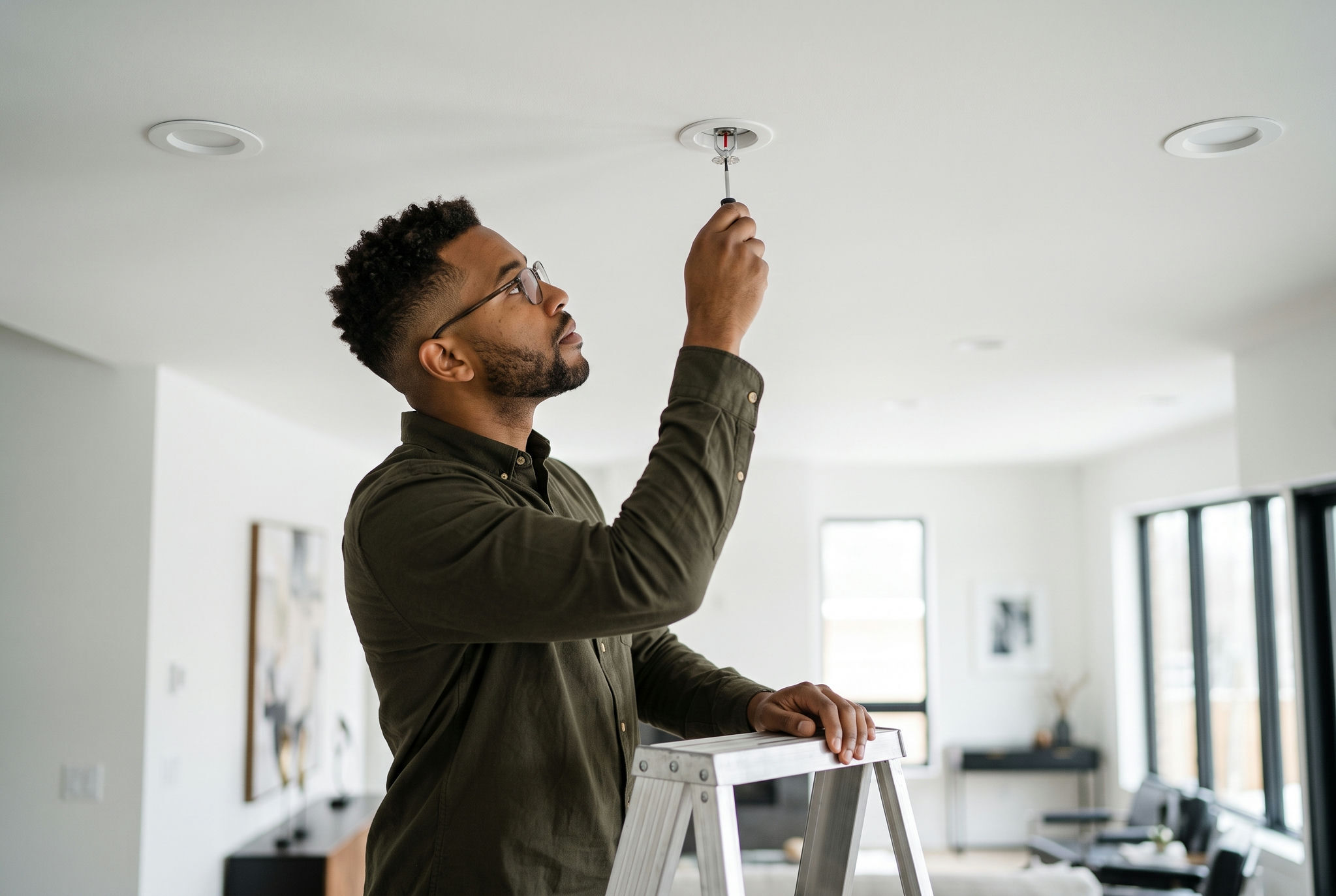
Residential sprinkler heads are activated by heat. When the temperature near a sprinkler head rises high enough, that individual head activates and releases water near the fire. In many cases, only the sprinkler closest to the fire operates.
This matters because homeowners often worry about unnecessary water damage. In a properly designed system, the goal is not to flood the house. The goal is to control the fire early, near the source, before it spreads.
Sprinklers do not activate from ordinary smoke, cooking steam, or a smoke alarm sounding. They respond to heat at the sprinkler head.
Why Sprinkler Planning Should Start Early
Fire sprinklers affect more than plumbing. They can affect ceiling layout, soffits, beams, lighting, attic routing, garage conditions, mechanical equipment, insulation, and water service.
If the sprinkler system is considered too late, the project may face conflicts such as sprinkler heads landing in poor visual locations, pipes conflicting with beams or recessed lights, or water supply issues appearing after permit drawings are already prepared.
Early coordination can help answer important questions:
- Where will sprinkler heads be located?
- Can concealed or low-profile heads be used?
- Can the system share the domestic water supply?
- Is the existing water meter large enough?
- Is the available pressure enough?
- Will a pump or tank be needed?
- Can piping be routed through walls, ceilings, or attic spaces?
- Does the local jurisdiction require a specific design approach?
- How will the sprinkler plan coordinate with the architectural and MEP drawings?
This is why residential sprinkler design should be part of the design conversation from the beginning.
CPVC Fire Sprinkler Systems
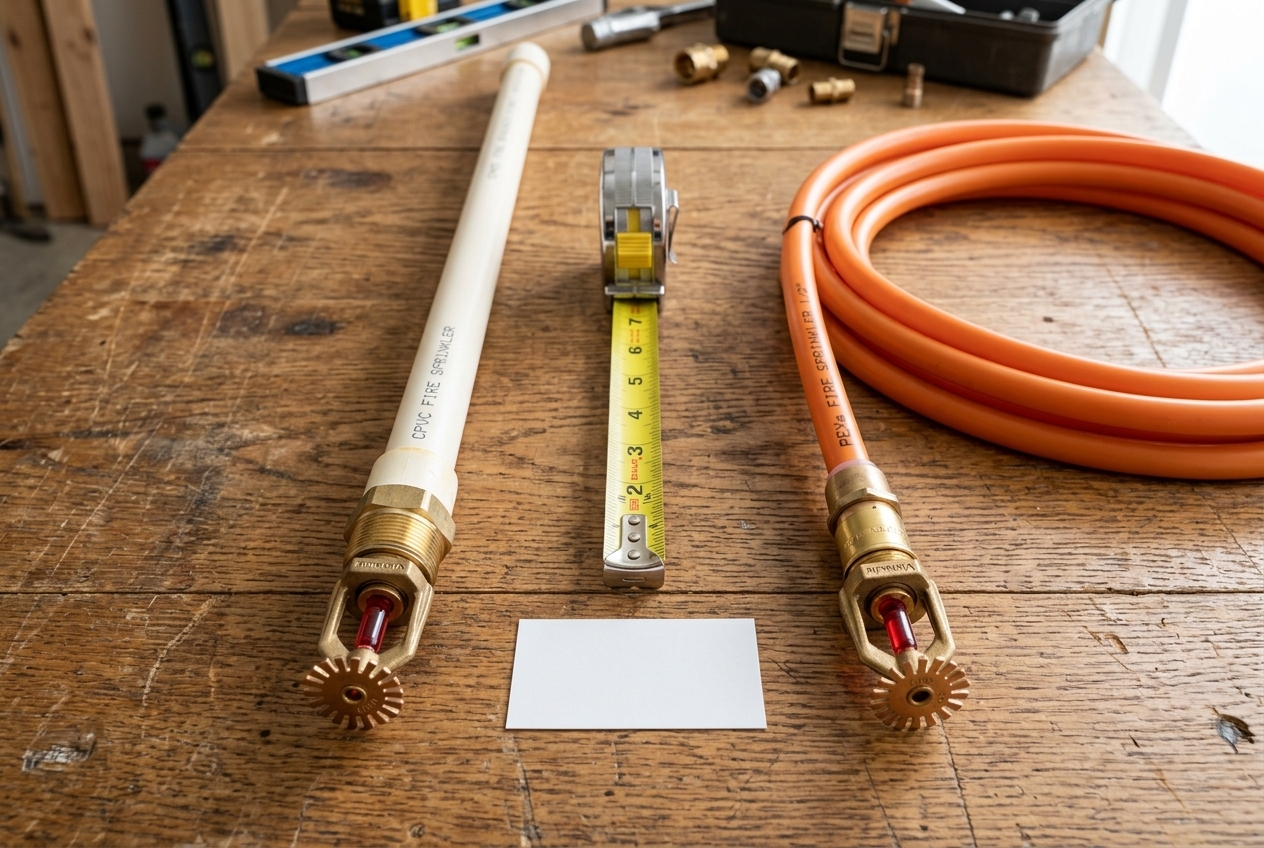
CPVC is one of the most common nonmetallic piping materials used in residential fire sprinkler systems. It is rigid, lightweight, corrosion-resistant, and widely recognized in the fire sprinkler industry.
In many residential projects, CPVC can be a practical option because it is familiar to many installers and can be routed through typical residential framing conditions. It is often used in concealed spaces such as walls and ceilings when installed according to its listing and manufacturer requirements.
Advantages of CPVC
CPVC fire sprinkler piping can offer several benefits:
- It is lightweight compared with metal piping.
- It is corrosion-resistant.
- It is familiar to many residential sprinkler contractors.
- It can be efficient for conventional layouts.
- It may be suitable for many NFPA 13D residential applications when properly listed and installed.
- It can work well in new construction and some remodel conditions.
Important CPVC Considerations
CPVC must be installed correctly. It is not the same as ordinary plumbing pipe, and it must be part of a listed fire sprinkler system. Compatibility with other building materials, sealants, insulation, adhesives, and chemicals must be considered. Solvent cementing must be done properly. Temperature exposure, attic conditions, support spacing, and protection requirements also matter.
In other words, CPVC can be a strong option, but only when it is designed and installed by qualified professionals following the approved system requirements.
FIREPEX Residential Fire Sprinkler Systems
FIREPEX is a residential fire sprinkler system from REHAU that uses flexible RAUPEX PEXa pipe and EVERLOC+ compression-sleeve fittings. It is intended for residential sprinkler applications under NFPA 13D and IRC P2904.
The biggest difference homeowners may notice is flexibility. Unlike rigid CPVC, FIREPEX uses flexible PEXa piping, which can help with routing through framing and around certain obstructions.
Advantages of FIREPEX
FIREPEX may offer several practical advantages:
- The flexible piping can simplify routing in some layouts.
- Fewer fittings may be needed in certain conditions.
- The system may be helpful where framing, ceiling, or retrofit conditions are more complicated.
- Compression-sleeve fittings can allow immediate pressure testing when installed correctly.
- It can be coordinated with residential plumbing-style installation approaches while still serving fire sprinkler requirements.
- For some new homes, ADUs, garage conversions, or remodels, this flexibility can be useful.
Important FIREPEX Considerations
FIREPEX is not generic PEX plumbing pipe. It is a specific fire sprinkler system with specific components, fittings, tools, listings, and installation requirements.
The contractor must use the approved system components and follow the manufacturer’s design and installation instructions. The project must also be accepted by the local authority having jurisdiction.
Like any sprinkler system, FIREPEX still requires proper design, hydraulic evaluation, sprinkler placement, water supply verification, and inspection.
CPVC vs. FIREPEX: Which One Is Better?
There is no single answer for every project.
CPVC may be a strong choice when the project has a conventional layout, the installer is highly familiar with CPVC fire sprinkler systems, and the routing is relatively straightforward.
FIREPEX may be attractive when flexibility is valuable, when routing is more complex, or when reducing fittings may help simplify the installation.
The right choice depends on several factors:
- Project type.
- New construction vs. remodel.
- ADU or garage conversion conditions.
- Installer experience.
- Local approval.
- Water pressure and flow.
- Pipe routing.
- Ceiling and attic conditions.
- Cost.
- Schedule.
- Manufacturer listing.
- Long-term maintenance expectations.
The best approach is not to choose a material first. The best approach is to evaluate the project, water supply, layout, code path, and local requirements, then choose the system that fits the design.
New Homes, ADUs, JADUs, and Remodels
Fire sprinkler requirements can vary depending on the project type and local jurisdiction.
For new single-family homes, sprinklers are commonly required under California residential code provisions and local enforcement. For ADUs and JADUs, the rules may depend on whether the primary residence has sprinklers, the type of ADU, the local interpretation, and any special program requirements.
For major remodels and additions, sprinklers may be triggered by the scope of work, size of addition, local ordinance, or other conditions. This is why homeowners should ask about sprinkler requirements early, before the design and construction budget are finalized.
A homeowner should never assume that a small-looking project has no sprinkler implications. The building department or fire authority may have specific requirements based on the project scope.
Sprinklers and Wildfire: What They Can and Cannot Do
In Southern California, many homeowners naturally connect fire sprinklers with wildfire safety. This is understandable, but the distinction is important.
A residential fire sprinkler system is mainly designed to control fires inside the home. It is not a substitute for wildfire home-hardening, defensible space, ember-resistant vents, Class A roofing, noncombustible materials near the house, or good landscape maintenance.
However, if a fire starts inside the home or reaches the interior, sprinklers can help control it early. That makes them an important part of the overall safety strategy.
For homes in wildfire-prone areas, the best approach is layered protection: exterior fire resilience plus interior fire suppression.
Aesthetic Coordination: Sprinklers Do Not Have to Ruin the Design
Many homeowners worry that sprinkler heads will make their ceilings look commercial or unattractive. In modern residential design, this can usually be handled well.
There are low-profile and concealed sprinkler options that can blend with the ceiling. Sprinkler heads can be coordinated with lighting, beams, ceiling patterns, soffits, and room layouts. The key is early planning.
When the architect, sprinkler designer, and contractor coordinate early, the system can be placed in a way that protects the home without compromising the interior design.
This is especially important in custom homes, high-end remodels, ADUs, and open-plan living areas where ceiling appearance matters.
Water Supply: A Critical Question
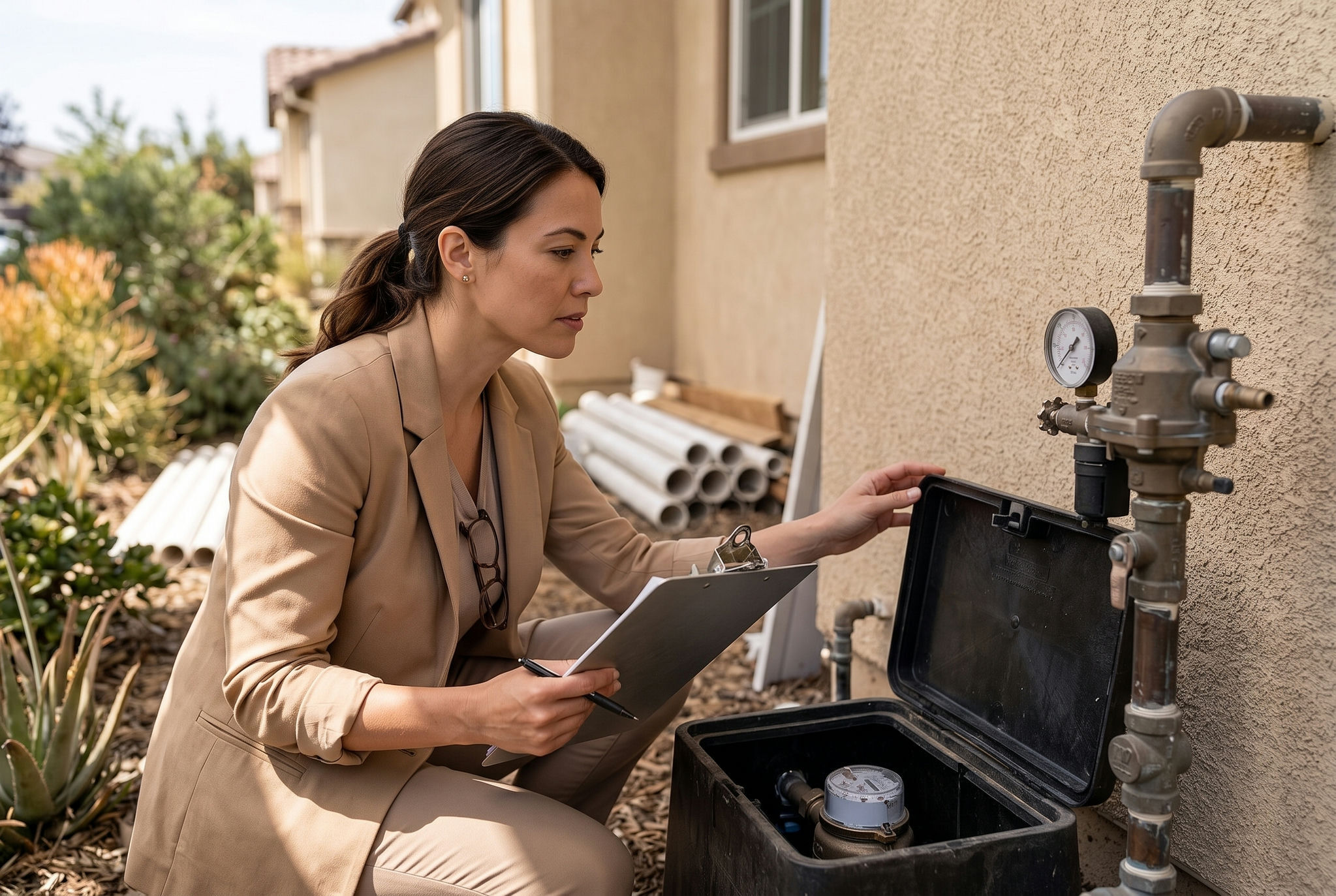
A residential sprinkler system depends on adequate water supply. The designer must evaluate available water pressure, flow, pipe size, meter capacity, and distance from the water source.
Some systems can connect to the home’s domestic water supply. Others may require a separate arrangement, larger meter, pressure tank, pump, or other upgrades. This depends on the project and the local jurisdiction.
For ADUs and detached structures, water supply coordination can be especially important because the unit may be far from the main service connection.
This is another reason to study the sprinkler system early. Water supply issues discovered late can affect cost, schedule, and design.
Why Professional Design and Approval Matter
A fire sprinkler system is a life-safety system. It should not be improvised in the field.
The system should be designed by a qualified professional or licensed fire sprinkler contractor familiar with residential standards, hydraulic calculations, approved materials, local requirements, and inspection procedures.
The local authority having jurisdiction reviews the system before approval. After installation, the system must be inspected and tested according to the applicable requirements.
For homeowners, this means the sprinkler system should be part of a coordinated permit package, not an afterthought added during construction.
Final Takeaway
Residential fire sprinklers make Southern California homes safer by helping control fires early, reducing heat and smoke, and giving occupants more time to escape.
For homeowners, the most important lesson is to plan the sprinkler system early. Whether the project is a new custom home, ADU, JADU, garage conversion, remodel, or addition, sprinkler design should be coordinated with the architecture, structure, MEP systems, water supply, and local permit requirements.
CPVC and FIREPEX can both be useful residential sprinkler options when they are properly listed, designed, installed, and approved. CPVC may be practical and familiar for many conventional installations. FIREPEX may offer flexibility and installation advantages in certain layouts.
The best system is not simply the one with the best material. It is the one that fits the project, meets code, works with the architecture, and protects the people who live there.
A safer home starts with coordinated design. Contact PixelArch LLC to coordinate your residential fire sprinkler design with your architectural and structural plans.
Frequently Asked Questions About Residential Fire Sprinkler Systems
For many new residential buildings in California, fire sprinklers may be required. For ADUs and JADUs, the requirement depends on the existing primary residence, project type, local jurisdiction, and any special local or program requirements. Always confirm with the city or fire authority before finalizing the design.
No. In most residential systems, only the sprinkler head exposed to enough heat will activate. The system is designed to respond near the fire area, not to spray water throughout the entire house.
Accidental activation is uncommon when the system is properly designed, installed, inspected, and protected. Sprinklers activate by heat, not ordinary smoke or cooking steam. In a real fire, sprinkler water is usually far less damaging than an uncontrolled fire and fire department hose streams.
Yes. Many residential sprinklers are available in low-profile or concealed styles. With early architectural coordination, sprinkler heads can be located in a clean and organized way that works with the ceiling design, lighting, beams, and finishes.
CPVC is a rigid plastic piping system commonly used for residential fire sprinklers. FIREPEX is a flexible PEXa-based residential fire sprinkler system. CPVC may be familiar and efficient in many conventional layouts. FIREPEX may offer more flexibility and fewer fittings in some routing conditions. The best choice depends on the project, installer, water supply, code path, and local approval.
Sometimes, yes. Some residential systems are designed as multipurpose systems that serve both domestic plumbing and fire sprinklers. Other systems are separate. The correct approach depends on the design standard, pipe sizing, pressure, flow, and local requirements.
Not always. Some homes can use the available domestic water supply. Other projects may need a larger meter, upgraded service, pressure tank, pump, or other water-supply solution. This should be checked early because water supply can affect cost and permit approval.
Yes. A remodel can be a good time to add sprinklers because ceilings and walls may already be open. However, the system still needs proper design, approved materials, water supply evaluation, permits, and inspection.
Sprinklers mainly help control fires inside the home. They are not a replacement for defensible space, ember-resistant vents, fire-resistant roofing, and home-hardening. However, if fire enters the home or starts inside, sprinklers can help control it early and reduce damage.
A qualified fire sprinkler designer, licensed contractor, or design professional typically prepares the layout and calculations, depending on the project and local requirements. The local building department, fire department, or authority having jurisdiction reviews and approves the system before installation and inspection.