For many Southern California homeowners, the detached garage is one of the most underused spaces on the property. It may hold old furniture, tools, or cars that rarely park inside—yet the family needs more flexible space: a private office, a guest suite, a place for aging parents, a rental unit, or an independent living area for adult children.
This is why detached garage ADUs have become one of the most attractive remodeling opportunities across Los Angeles, Orange County, San Diego, Riverside, and San Bernardino.
An ADU (Accessory Dwelling Unit) is a secondary residential unit on the same lot as the primary home. It can be attached, detached, newly built, or created by converting an existing structure such as a garage. When designed properly, a detached garage ADU turns an existing backyard structure into a comfortable, private, and highly functional living space—without requiring a completely new build.
Why Detached Garage ADUs Make So Much Sense in Southern California
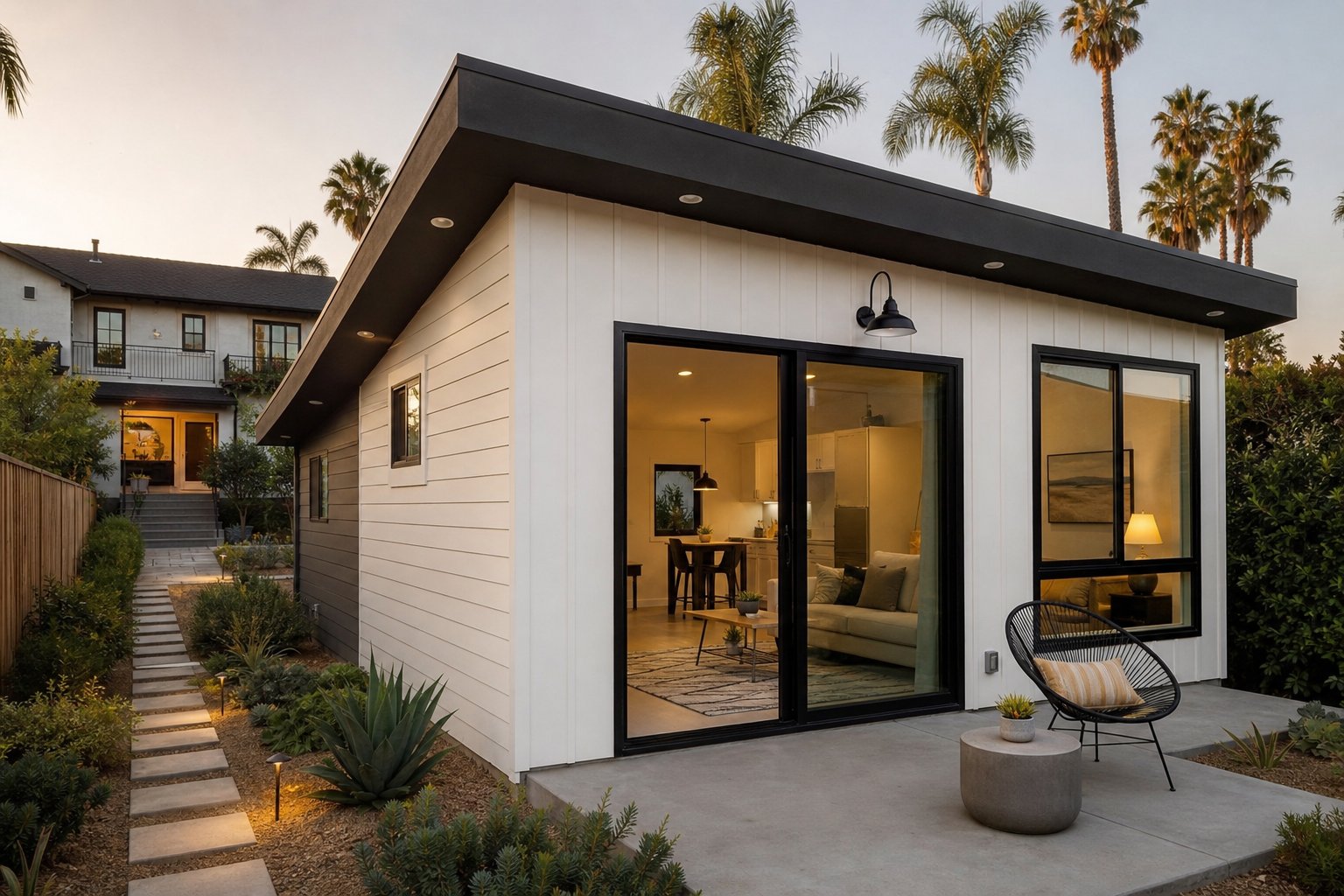
Southern California homes frequently have detached garages at the rear of the property, near an alley, driveway, or backyard. In most cases, these garages are already separated from the main house, making them ideal candidates for conversion into an independent unit.
That natural separation is a major advantage. A detached ADU gives the occupant real privacy while maintaining a close relationship to the main home. It can function as a guest house, rental unit, studio apartment, home office suite, or flexible family space.
Land in Southern California is expensive. Existing lots are often limited in size. Instead of buying a larger home or moving to a different neighborhood, homeowners can use the property they already have far more intelligently. A detached garage ADU maximizes your existing footprint—no new land required.
At PixelArch LLC, we use BIM and Revit workflows to evaluate existing garage structures, plan efficient ADU layouts, and coordinate structural, mechanical, and permit documentation from a single integrated model.
Garage ADU vs. New Construction: What’s the Difference?
A detached garage ADU can be created in several ways: the existing garage can be converted into livable space, demolished and replaced with a purpose-built ADU, or expanded if the site allows it.
Compared with building a completely new detached structure, a garage-based ADU offers several advantages:
- Established location — The garage already has driveway access, a rear-yard position, and a footprint that works for a small independent unit.
- Accepted footprint — A legally existing garage may simplify planning and zoning considerations.
- Less site disruption — The project may preserve more open space, landscaping, and backyard function compared with building elsewhere on the lot.
- No changes to the main house — Families can stay in their home during construction without a major interior remodel.
However, garage conversion is not automatically simpler in every case. Some older garages have weak foundations, low ceilings, poor framing, moisture problems, or outdated electrical systems. A thorough architectural evaluation should compare conversion, partial reconstruction, and full replacement before any decision is made.
The Biggest Advantage: Using Existing Space More Efficiently
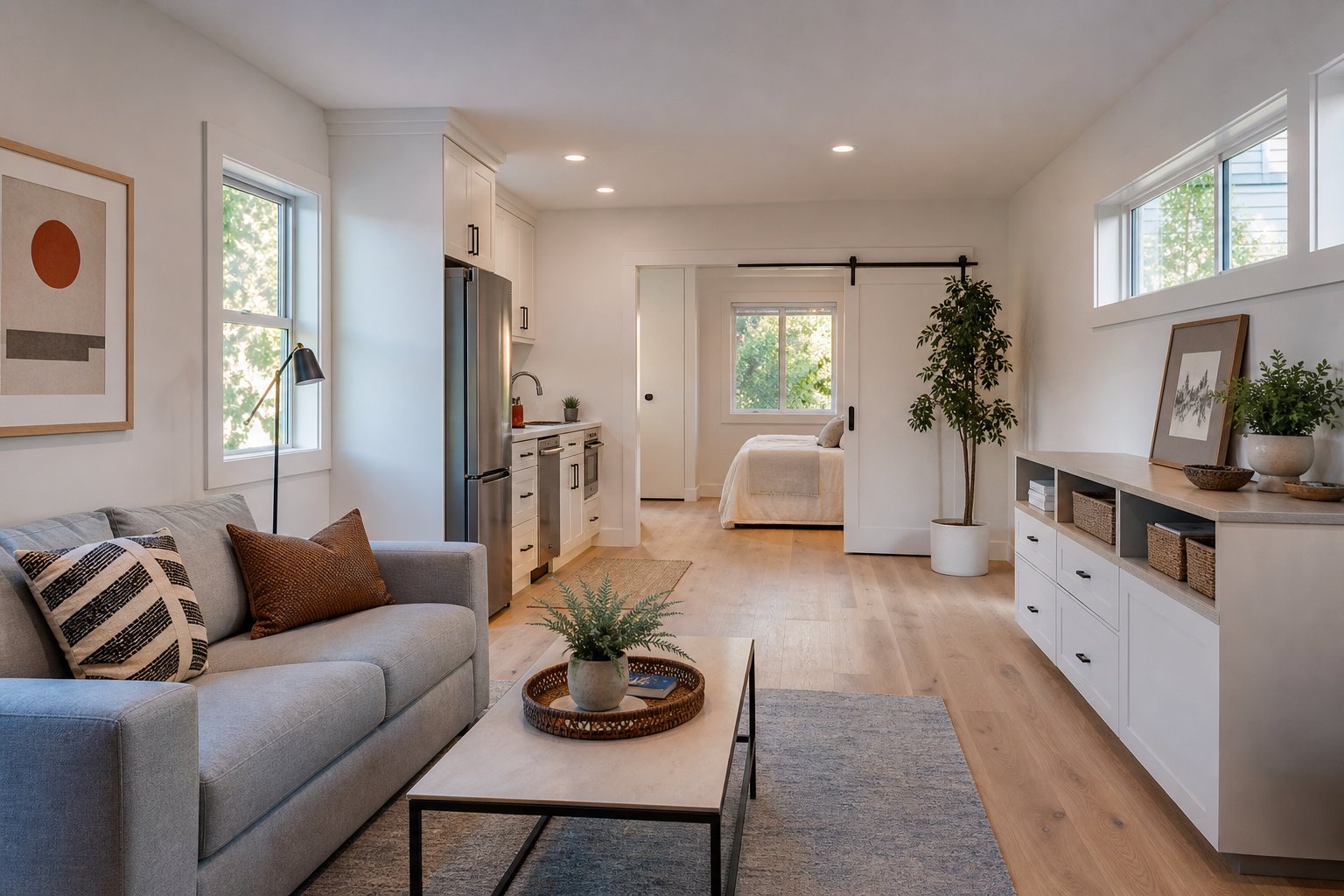
One of the strongest arguments for a detached garage ADU is efficiency. Instead of using the garage for storage, homeowners can create a compact but complete unit with:
- A living area and sleeping area
- A kitchenette or full kitchen
- A bathroom with modern fixtures
- Storage and closet space
- A dedicated office zone or flex room
This supports many different needs:
- A private rental unit generating monthly income
- A guest suite for family and friends
- A living space for parents or adult children
- A quiet work-from-home office
- A creative studio with residential flexibility
- A future downsizing option for the homeowner
That flexibility is one of the main reasons ADUs are so valuable. A well-designed ADU doesn’t serve only one moment in life—it can support different family and financial needs over many years.
Creating an Office Room Inside a Detached Garage ADU
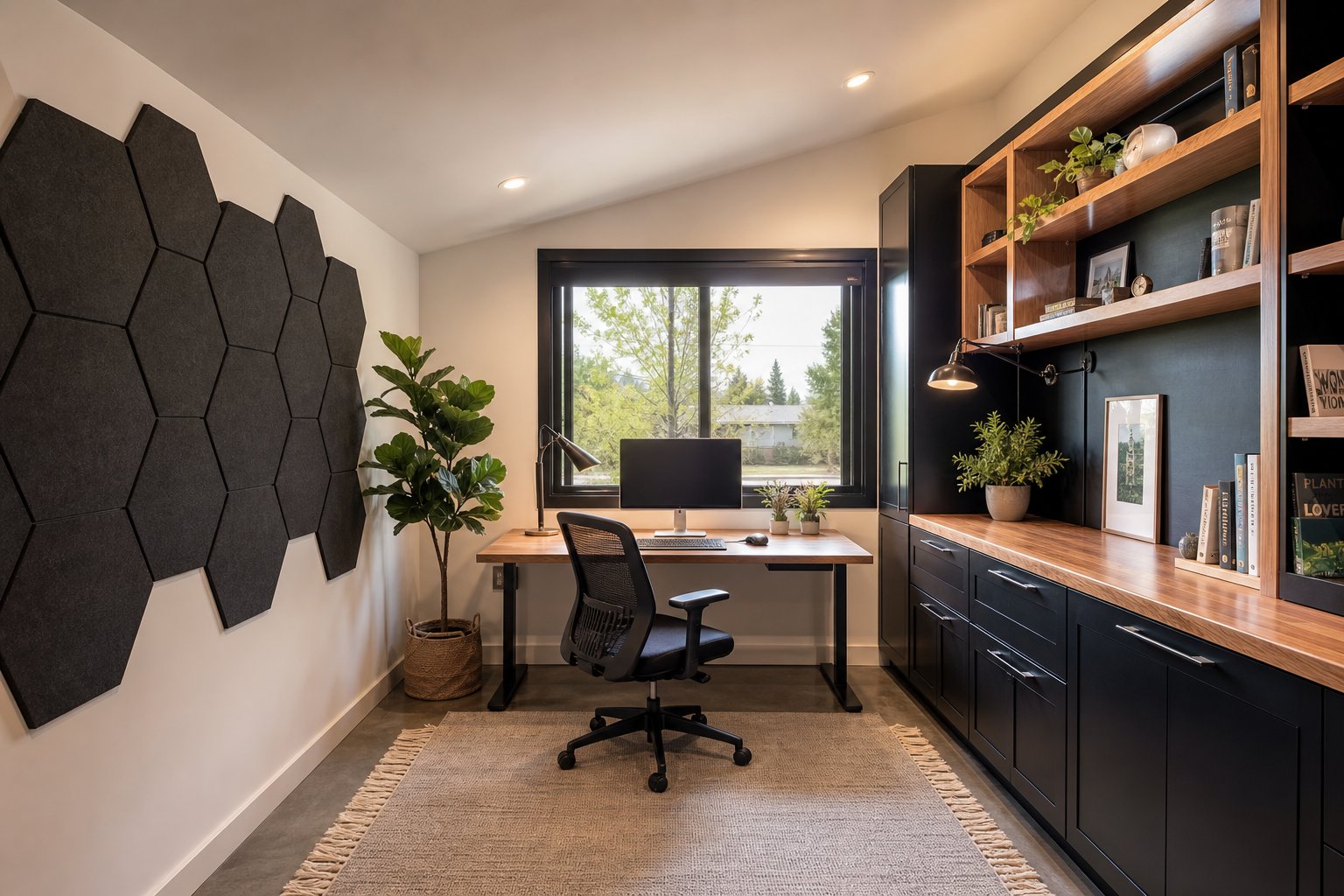
The home office is one of the most important design opportunities in a detached garage ADU. Many homeowners now work remotely or run small businesses from home, but the main house may lack the privacy, quiet, or separation needed for focused work.
A detached ADU solves this beautifully. Depending on the garage size and design strategy, the office can be integrated in several ways:
Small Garage ADU (Single-Car)
The office may be designed as a built-in work niche—a desk wall with shelving, natural light, and acoustic separation from the sleeping area.
Larger Garage ADU (Two-Car)
The office can become a dedicated room or semi-private flex space. Sliding doors, pocket doors, glass partitions, or built-in cabinetry separate work from daily living without making the unit feel small.
Future-Proof Design
For homeowners who want the ADU to remain rentable in the future, the office should be designed as flexible space. It may function as an office today but later serve as a guest room, nursery, reading room, or small bedroom if it meets applicable code requirements.
The key is not just to “add a desk.” The office should be planned with daylight, electrical outlets, data connection, sound control, storage, privacy, and comfortable ventilation.
Privacy Matters: For the Main House and the ADU
A successful detached garage ADU needs privacy for both the homeowner and the ADU occupant. This is especially important in Southern California, where many lots are narrow and backyards are shared.
Good architectural planning can make the ADU feel independent without making the backyard feel divided. Important design strategies include:
- Placing the ADU entrance carefully—away from the main home’s private areas
- Using landscaping, fences, screens, and planters to create natural privacy zones
- Avoiding direct window views into the main house
- Designing a comfortable path from the street or driveway to the ADU entrance
- Locating outdoor seating areas so they don’t conflict between units
- Using strategic lighting to define zones without overlighting private areas
When privacy is designed early, the ADU feels intentional and welcoming. When privacy is ignored, the ADU may feel too close to the main home—even if the floor plan is perfectly functional.
Why ADUs Are Attractive for Homeowners and Developers
For homeowners, a detached garage ADU can improve daily life and long-term property value. It provides extra income, supports family members, or creates a private workspace.
For small developers and investors, detached garage ADUs increase the usefulness of a property without changing the primary residence. In high-demand Southern California neighborhoods, a well-designed ADU makes a property more flexible and more attractive to future buyers.
The value isn’t only in square footage—it’s in the independence of the space. A detached ADU can have its own entrance, bathroom, kitchen, sleeping area, and office zone. This makes it far more useful than a simple room addition.
Design Challenges Homeowners Should Understand
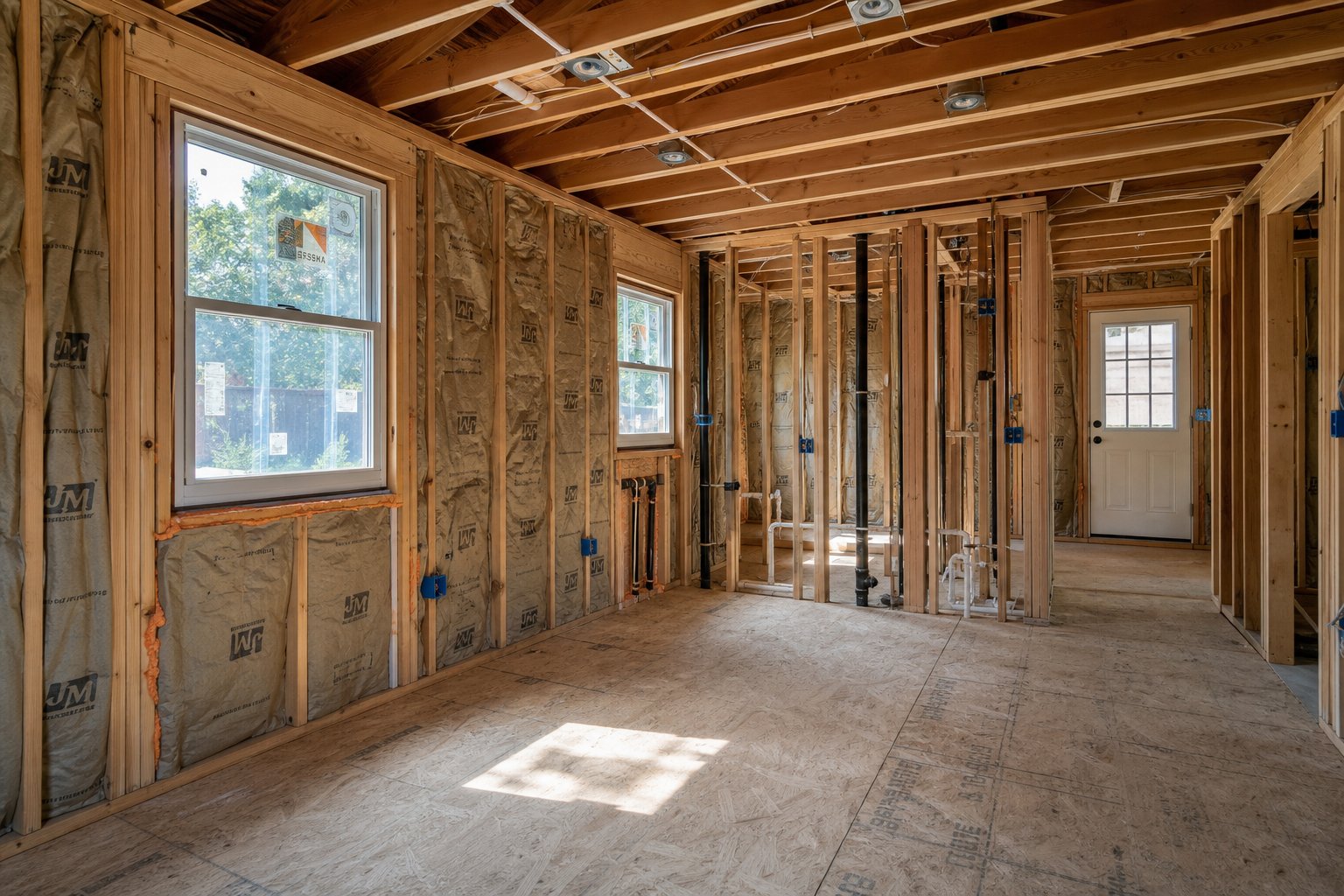
Even though detached garage ADUs are attractive, they still require careful planning:
- Structural upgrades — The existing garage may need foundation evaluation, roof replacement, wall insulation, and floor moisture protection.
- Utilities — The ADU needs proper electrical capacity, plumbing, drainage, HVAC, ventilation, and water heating. Distance from main utility connections affects cost.
- Code compliance — Fire separation, property-line setbacks, drainage, accessibility, Title 24 energy compliance, and local zoning rules must be reviewed early.
- Windows and doors — Must meet current energy and safety standards for habitable space.
This is why the first step should be a feasibility study, not construction. A feasibility study helps determine whether the garage should be converted, rebuilt, expanded, or redesigned—and what the realistic budget looks like.
PixelArch LLC provides comprehensive ADU feasibility assessments using 3D modeling to help homeowners visualize the finished unit before construction begins. Contact us for a consultation →
Conversion or Rebuild: Which Is Better?
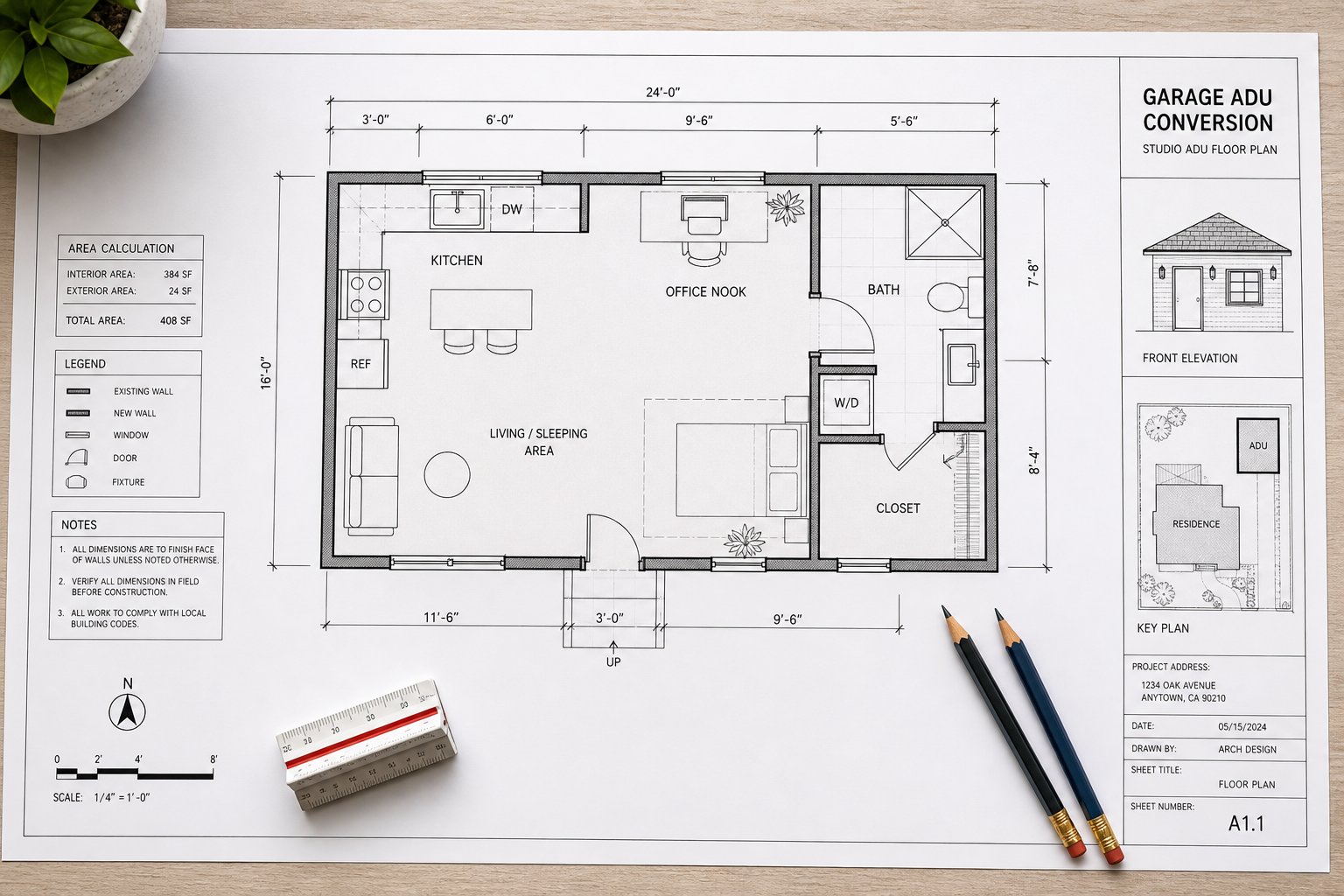
Many homeowners assume converting the existing garage is always cheaper than rebuilding. Sometimes it is—but not always.
Conversion works best when:
- The garage is in good condition with a usable foundation
- Ceiling height is adequate (typically 8 ft minimum)
- The layout is practical for a living unit
- Structural framing is sound
Rebuild may be better when:
- The garage is very old, damaged, or poorly built
- Ceiling height is too low
- The foundation cannot support residential loads
- A new structure would allow better insulation, windows, layout, and office integration
The right answer depends entirely on the property. A good architectural team should evaluate the existing structure before recommending one direction.
How to Make a Small ADU Feel Larger
Detached garage ADUs are often compact, so design quality matters enormously. A small unit can feel comfortable and spacious if every inch is planned carefully:
- Open living and sleeping layouts for studio ADUs
- Built-in storage instead of bulky furniture
- Large windows placed for maximum light and privacy
- Vaulted ceilings where structurally possible
- Sliding doors instead of swing doors to save floor space
- Light-colored finishes to amplify natural light
- Efficient galley or L-shaped kitchen layouts
- A compact but comfortable bathroom
- A built-in desk or office wall
- Outdoor space that visually extends the interior
The goal is to make the ADU feel complete, not crowded.
The Office Room as a Selling Point
A dedicated office room or work zone can be one of the strongest selling points of a detached garage ADU. Many people want a quiet place to work, study, meet clients online, manage a business, or create content. A detached ADU office provides the separation that the main house often cannot.
For homeowners, this means better work-life balance. For renters, the unit is more practical and commands higher rent. For future buyers, the property has built-in flexibility that’s increasingly in demand.
A well-designed ADU office should include:
- Sufficient electrical outlets and dedicated circuits
- Good natural and task lighting
- Acoustic comfort and sound isolation
- Built-in storage and shelving
- A clean, professional background for video calls
- Comfortable ventilation and climate control
The office should feel like part of the architecture, not an afterthought.
Southern California Lifestyle: Indoor-Outdoor ADU Living
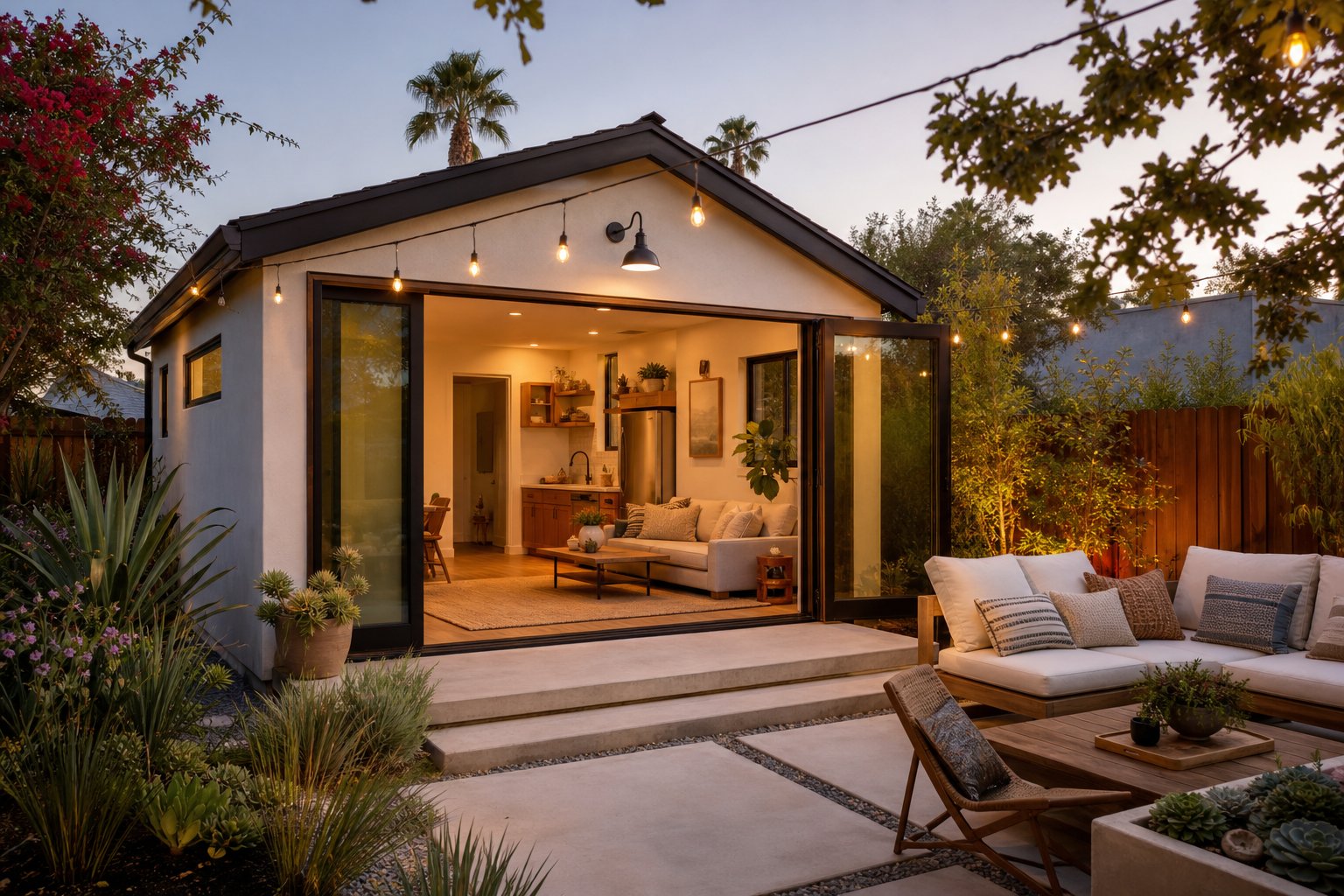
Detached garage ADUs work especially well with the Southern California lifestyle. Because the climate allows outdoor living for much of the year, a small ADU can feel much larger when connected to a patio, garden, courtyard, or private deck.
- A simple outdoor seating area becomes an extension of the living room
- A small garden creates a natural privacy screen
- A shaded patio becomes a second workspace or reading area
- Folding or sliding glass doors blur the line between inside and outside
This is where architecture makes the biggest difference. The ADU should not be treated as a box in the backyard—it should be designed as part of the whole property.
Questions Homeowners Should Ask Before Starting
Before converting a detached garage into an ADU, homeowners should ask these key questions:
- Is the garage legally existing on the property?
- Is the structure strong enough to convert to habitable space?
- Does the foundation need upgrading for residential loads?
- Is there enough ceiling height (typically 8 ft minimum)?
- Can plumbing and sewer lines reach the garage location?
- Where should the entrance be located for privacy?
- Can we include a dedicated office room or flex space?
- Will the ADU be used by family, rented out, or kept as a private office?
- Should we convert the existing garage or rebuild entirely?
- How will the ADU affect the usable backyard space?
- What permits, Title 24 energy calculations, and inspections are required?
Answering these questions early helps avoid expensive redesign later.
Cost Considerations for Detached Garage ADUs
Costs for detached garage ADUs in Southern California vary widely depending on the scope of work:
- Basic garage conversion (existing structure, minimal structural changes): $40,000–$80,000
- Mid-range conversion (new bathroom, kitchen, insulation, windows, office): $80,000–$150,000
- Full rebuild or expansion (new structure on existing footprint): $150,000–$250,000+
These ranges depend on garage condition, unit size, finish level, utility distance, permit requirements, and whether a dedicated office room is included. Early feasibility analysis helps set realistic budget expectations before design begins.
Final Takeaway
A detached garage ADU can be one of the smartest ways to add usable space to a Southern California home. Compared with building a completely new structure from scratch, a garage-based ADU may make better use of an existing footprint, preserve more of the yard, reduce disruption to the main house, and create a flexible living space with strong long-term value.
For homeowners, it can provide rental income, family housing, guest space, or a private home office. For developers, it can increase the functionality and market appeal of a property.
The best ADU is not just code-compliant—it is comfortable, private, efficient, and adaptable. With thoughtful architectural planning, a detached garage can become much more than storage. It can become a beautiful small home, a productive office, and one of the most valuable spaces on the property.
Ready to explore whether your detached garage can become a functional ADU with a dedicated office? Contact PixelArch LLC for a feasibility review and 3D concept design.
Frequently Asked Questions About Detached Garage ADUs
A detached garage ADU (Accessory Dwelling Unit) is a secondary residential unit created by converting or rebuilding an existing detached garage into livable space. It typically includes a living area, sleeping area, kitchen, bathroom, and can also include a dedicated home office.
Costs vary depending on scope. A basic conversion with minimal structural changes runs $40,000–$80,000. A mid-range conversion with bathroom, kitchen, insulation, and office costs $80,000–$150,000. A full rebuild or expansion can range from $150,000–$250,000 or more.
Yes. Converting a garage into habitable space requires building permits in all Southern California jurisdictions. You’ll need architectural plans, structural calculations, Title 24 energy compliance documentation, and inspections throughout construction.
It depends on the garage’s condition. Conversion works best when the foundation is sound, ceiling height is adequate (8 ft minimum), and framing is in good shape. Rebuilding may be better if the garage is old, damaged, has low ceilings, or a poor foundation.
Absolutely. A home office is one of the most valuable features of a detached garage ADU. It can be designed as a built-in work niche in smaller units or a dedicated room in larger two-car garage conversions, with proper lighting, outlets, data connections, and sound isolation.
Good architectural planning addresses privacy through careful entrance placement, landscaping screens, avoiding direct window views into the main house, strategic fencing and planters, and separate outdoor zones. Privacy should be designed from the start, not added as an afterthought.
Title 24 requires garage ADU conversions to meet California’s energy efficiency standards, including proper wall and ceiling insulation, energy-efficient windows and doors, compliant HVAC systems, water heating efficiency, and lighting requirements. An energy calculation report is required for permitting.
Yes. A well-designed detached garage ADU can significantly increase property value by adding independent living space, rental income potential, and flexible functionality. In high-demand Southern California markets, properties with ADUs are more attractive to buyers and investors.
Timeline varies by project scope. A straightforward conversion typically takes 3–6 months including design, permitting, and construction. More complex projects involving structural rebuilds or utility extensions may take 6–12 months.
Key strategies include open studio layouts, built-in storage, large windows for natural light, vaulted ceilings where possible, sliding doors instead of swing doors, light-colored finishes, efficient kitchen layouts, and outdoor living space that visually extends the interior.

One comment
Pingback: Best Time to Start Designing a Remodel or ADU in Southern California | PixelArch LLC