How Southern California Homeowners Can Reduce Wildfire Damage Before Summer Starts
Wildfire season is one of the most serious concerns for Southern California homeowners — especially those living near hillsides, canyons, open land, dry vegetation, or Wildland-Urban Interface areas. Every year, homeowners watch how quickly fire can move through dry brush, carried by wind and fueled by heat, drought, and combustible materials around homes.
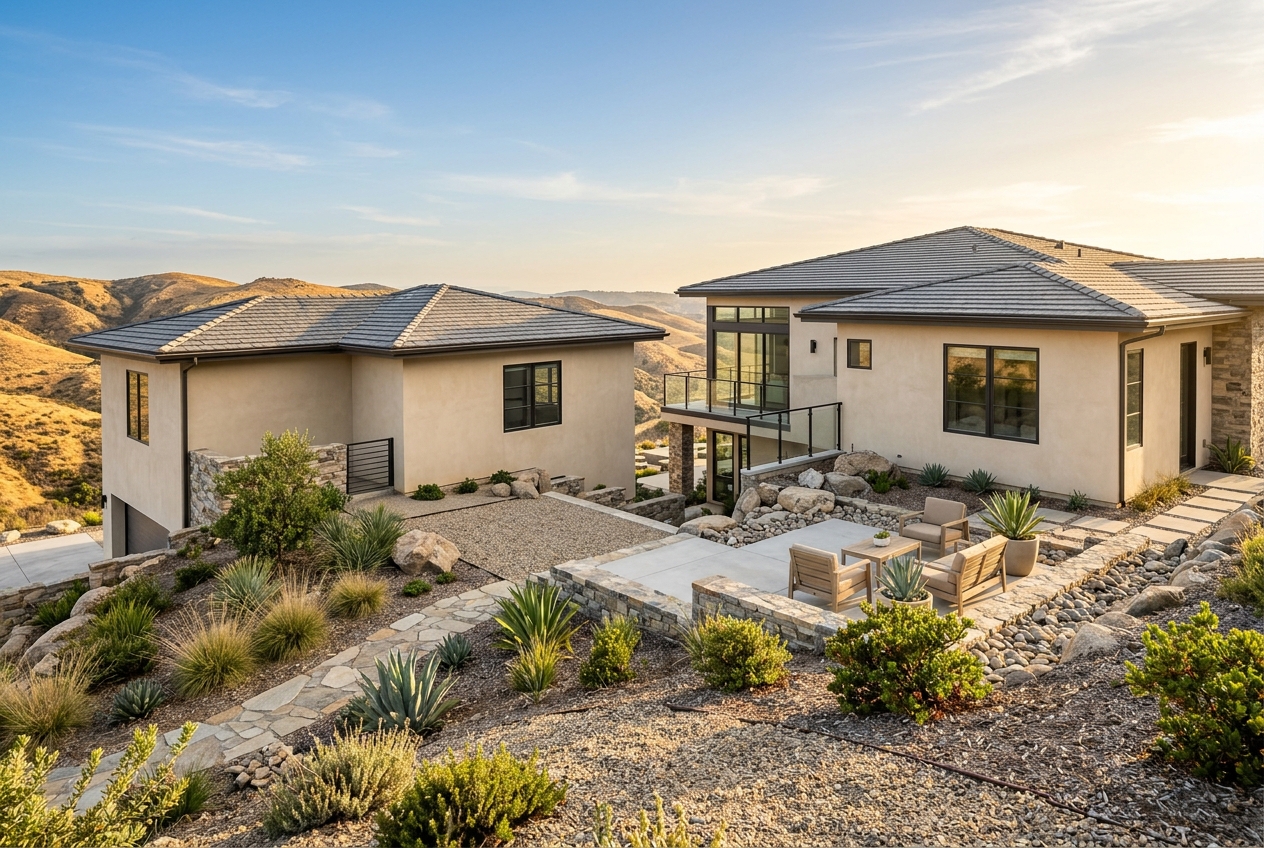
No house can be guaranteed fireproof, but many homes can become significantly more wildfire-resilient with smart preparation, better materials, defensible space, and good architectural planning. The best time to reduce wildfire damage isn’t when smoke is already in the air — it’s before summer starts, while there’s still time to inspect the property, clean vulnerable areas, make upgrades, and plan larger improvements.
Wildfire Damage Isn’t Only Caused by Direct Flames
Many homeowners picture wildfire damage as a wall of flames reaching the house. That can happen — but many homes are actually damaged or destroyed by wind-driven embers traveling well ahead of the main fire. Embers can land on roofs, gutters, decks, fences, vents, patio furniture, dry leaves, mulch, and other combustible materials. Once those small materials ignite, fire can spread to the home itself. This is why wildfire preparation should focus on two main goals:
- Reduce the chance that embers can ignite the home.
- Reduce the amount of combustible material near the structure.
For Southern California homes in dry summer conditions, this two-part approach is essential.
Understanding Defensible Space: Zone 0, Zone 1, and Zone 2
Fire-safety professionals organize the area around a home into three defensible space zones. Each zone has a different job, and together they create layers of protection between wildfire fuel and your walls.
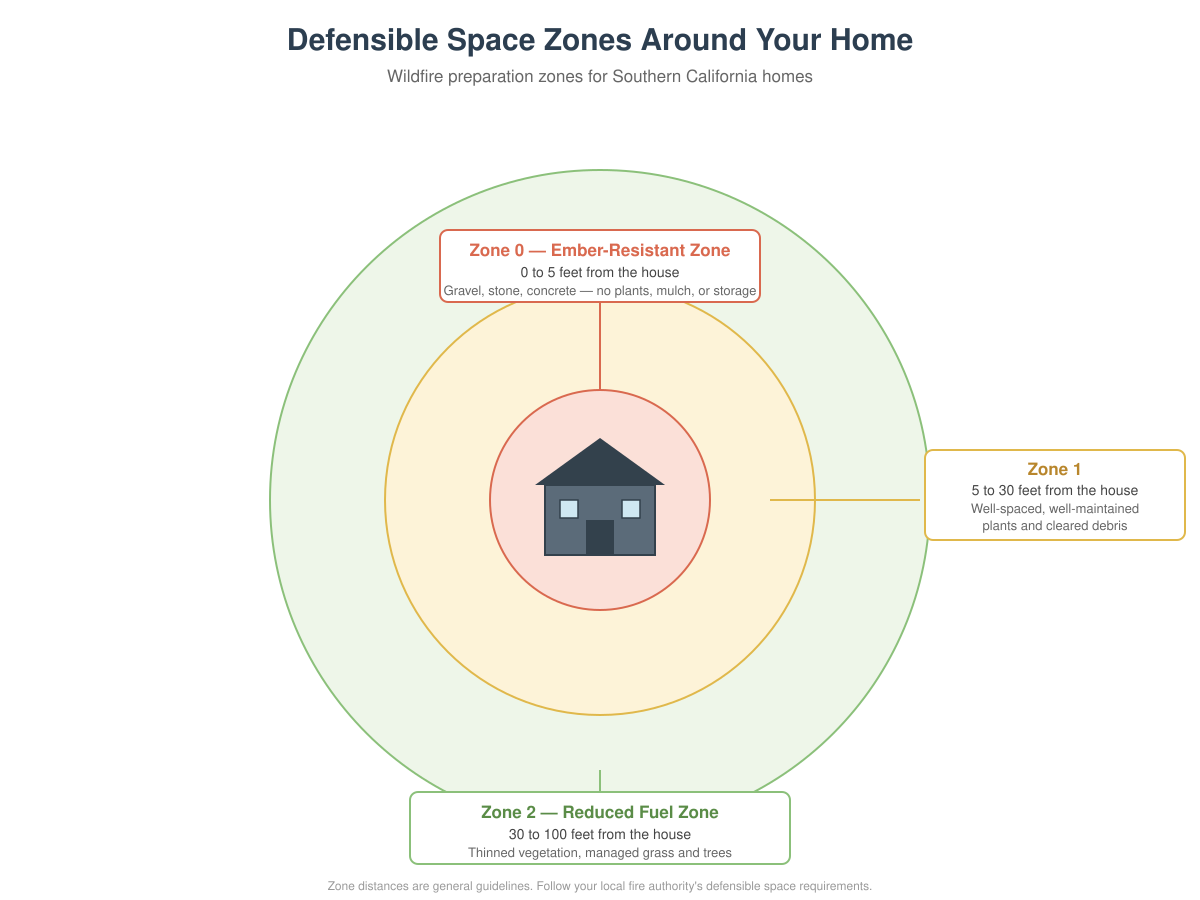
Zone 0 (0–5 feet): The Ember-Resistant Zone
The five feet closest to your exterior walls, windows, doors, decks, and attached structures should be as clean, simple, and noncombustible as possible. Skip firewood, cardboard, trash bins, outdoor cushions, wood furniture, dry plants, and bark mulch directly against the house. Gravel, concrete, pavers, decomposed granite, and stone are better choices here. This is where wind pushes embers most — against walls, under decks, near doors, and into corners — so it deserves the strictest standard.
Zone 1 (5–30 feet): The Managed Zone
Plants can stay here, but they need spacing, maintenance, and separation from windows and vents. Well-maintained, well-spaced landscaping in this zone still looks great — the goal isn’t to remove all design character, just to avoid creating a continuous fuel path toward the house.
Zone 2 (30–100 feet): The Reduced Fuel Zone
Further out, the priority shifts to thinning vegetation, managing grass height, and removing dead material so fire has less to burn and firefighters have a safer area to work if needed. A well-designed defensible landscape can still include trees, plants, pathways, outdoor seating, and shade — the key is spacing, maintenance, and material selection at every distance from the home.
Clean Roofs, Gutters, and Valleys Before Summer
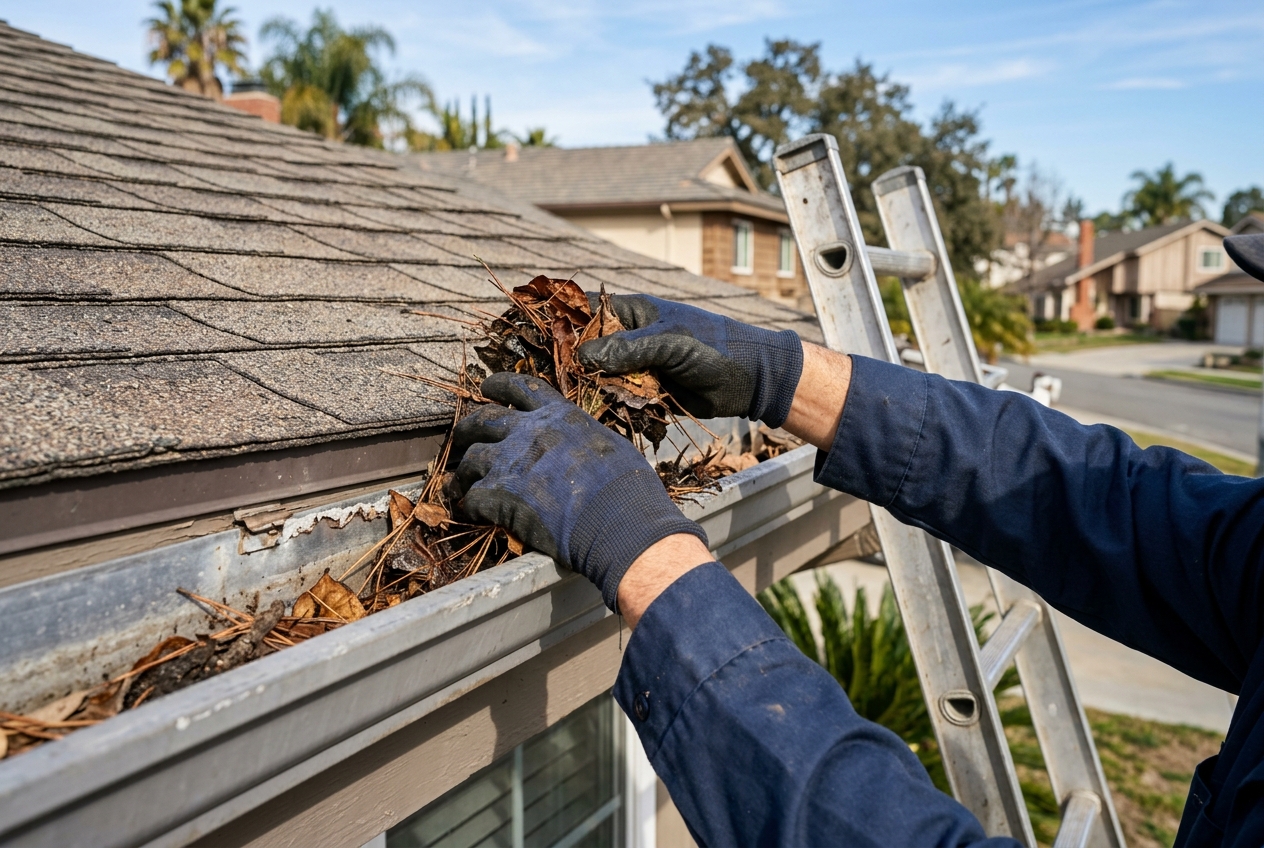
The roof is one of the most vulnerable parts of the house during a wildfire. Embers can land on roof surfaces, collect in valleys, or ignite dry leaves sitting inside gutters. Before summer starts, homeowners should clean:
- Roofs and roof valleys
- Gutters
- Skylight edges and dormers
- Flat roof areas and corners where leaves collect
- Areas behind chimneys or parapets
Even a fire-resistant roof becomes vulnerable if dry leaves, pine needles, branches, or debris are sitting on top of it. If you’re planning a remodel, roof replacement, or ADU, this is also the right time to review roof materials, roof edge details, gutter design, and how the roof connects to walls, vents, and eaves.
Pay Attention to Vents and Openings
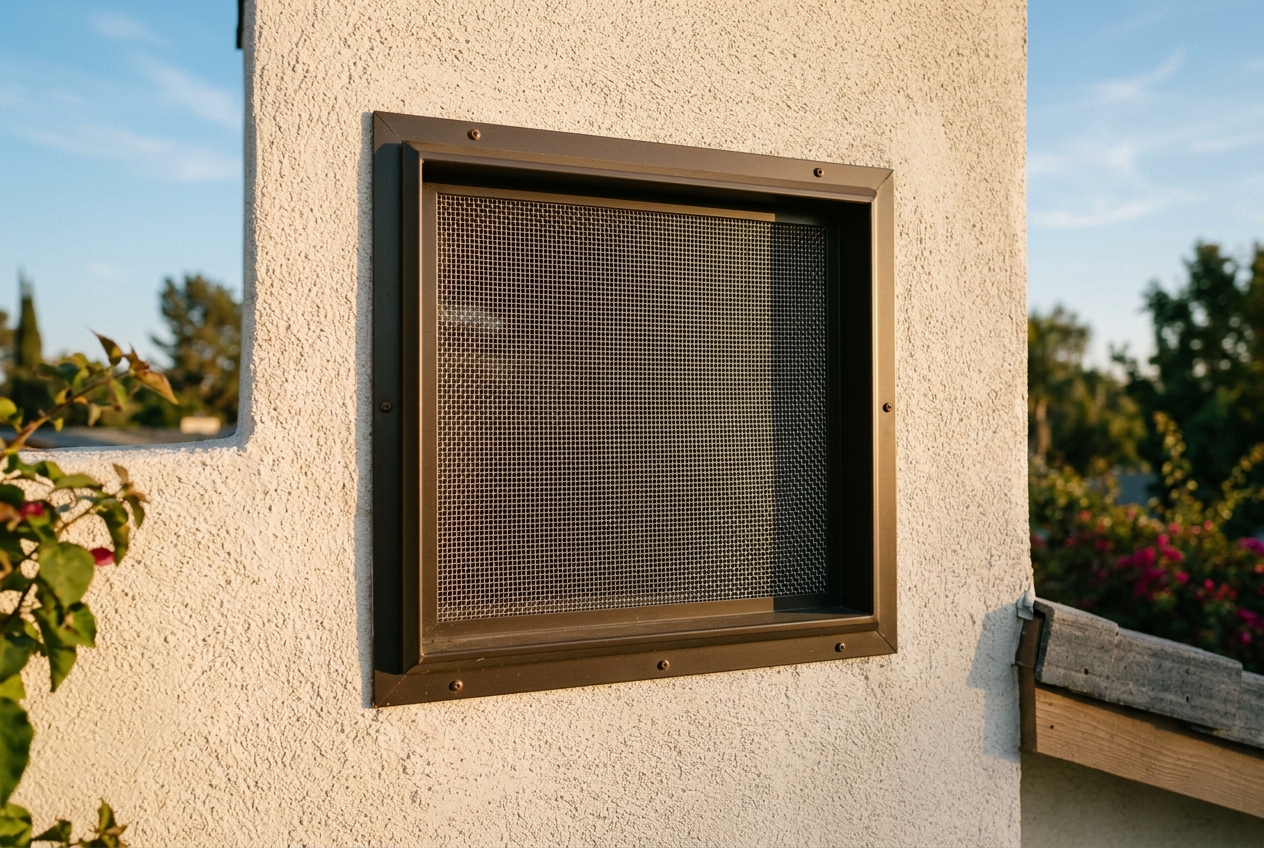
Vents are necessary, but they’re also a weak point during wildfire conditions. Embers can enter attic vents, crawlspace vents, and garage vents if screens are damaged, gaps are open, or covers are broken. Inspect vents before fire season for damage. Older vents can often be upgraded to ember-resistant vents or protected with appropriate noncombustible metal mesh. This matters most for attic spaces — if embers get in, fire can spread inside the structure before it’s even visible from outside. During remodeling, vent locations and vent products should be reviewed carefully; a small detail here can make a major difference.
Windows Matter More Than Many Homeowners Realize
Heat, flames, and wind-blown debris can break vulnerable glass, letting embers and smoke into the house. Older single-pane windows are generally more vulnerable than upgraded window systems. When remodeling or replacing windows, consider stronger glazing options, better frames, and exterior details that reduce heat and ember exposure. For Southern California homes, window planning isn’t only about views and daylight — it also affects energy performance, comfort, security, and wildfire resilience. A well-designed home can still have beautiful windows; the type, placement, shading, and surrounding materials just need to be selected with the local fire environment in mind.
Decks, Patios, and Fences Can Bring Fire to the House
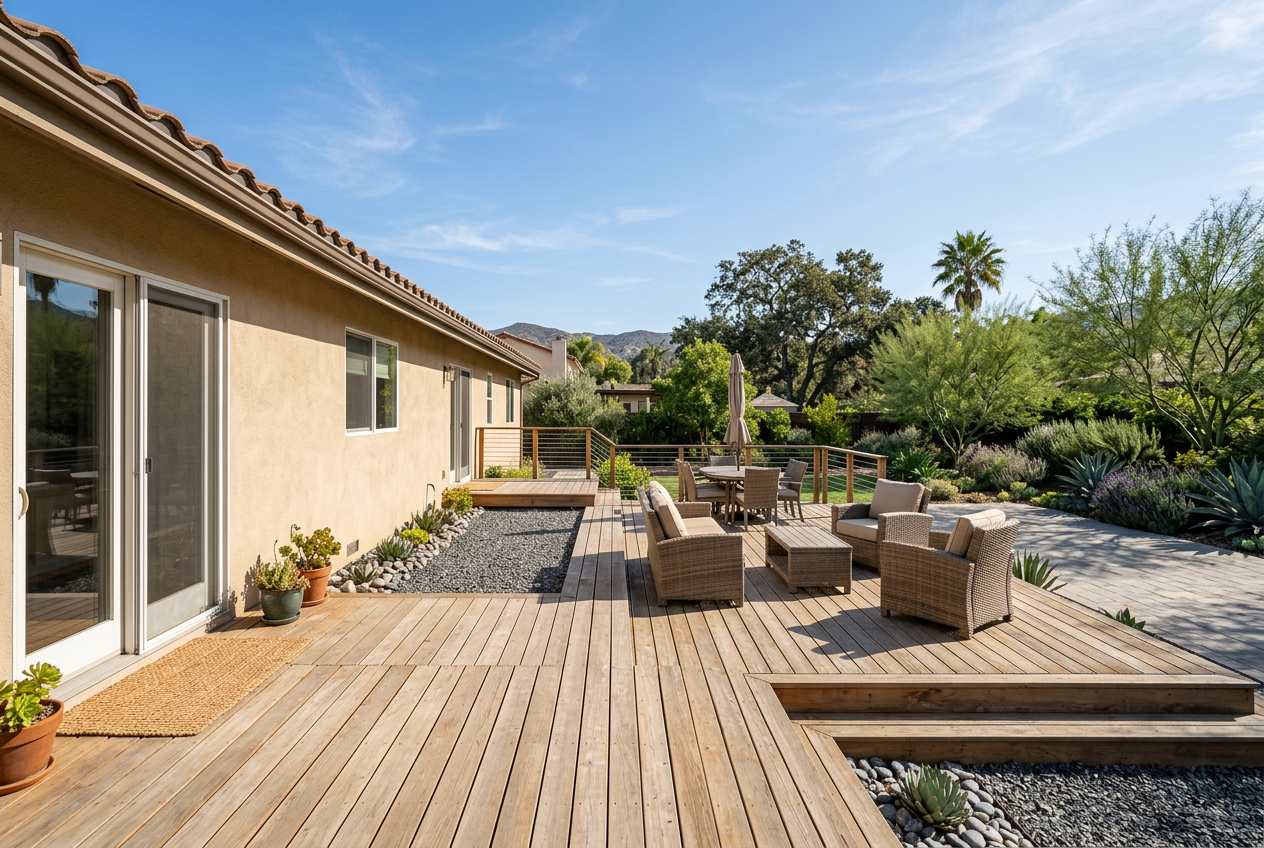
Decks, patios, pergolas, wood fences, outdoor kitchens, and backyard living spaces are valuable for lifestyle — but in fire-prone areas they need careful design and maintenance. A wood fence that touches the house directly can act like a fuse during a fire. A deck with dry leaves underneath can ignite from embers. Patio furniture, cushions, umbrellas, and storage items can burn quickly if they’re too close to the building. Before summer, inspect:
- Deck surfaces and the underside of decks
- Wood fences connected to the house
- Pergolas and patio covers
- Outdoor furniture and storage areas
- Trash, recycling bins, and firewood storage
A simple improvement is creating a noncombustible break between a fence and the house, or clearing storage from under decks. When remodeling, consider more fire-resistant materials and details for decks, railings, fences, and exterior living areas.
Remodels Are the Best Time to Improve Fire Resilience
Many wildfire-resilience upgrades are easiest when coordinated with a remodel. Replacing siding? It may be the right time to consider more ignition-resistant exterior materials. Replacing the roof? Roof edge details and gutters can be improved at the same time. Upgrading windows? Stronger glazing and better frames can be selected. Adding an ADU? The site plan can include defensible space from day one. Wildfire resilience shouldn’t be an afterthought — it should be part of the design conversation from the start. A remodel can improve the look of your home, increase comfort, and reduce vulnerability to fire damage, all at once.
ADUs and Detached Structures Need Fire Planning Too
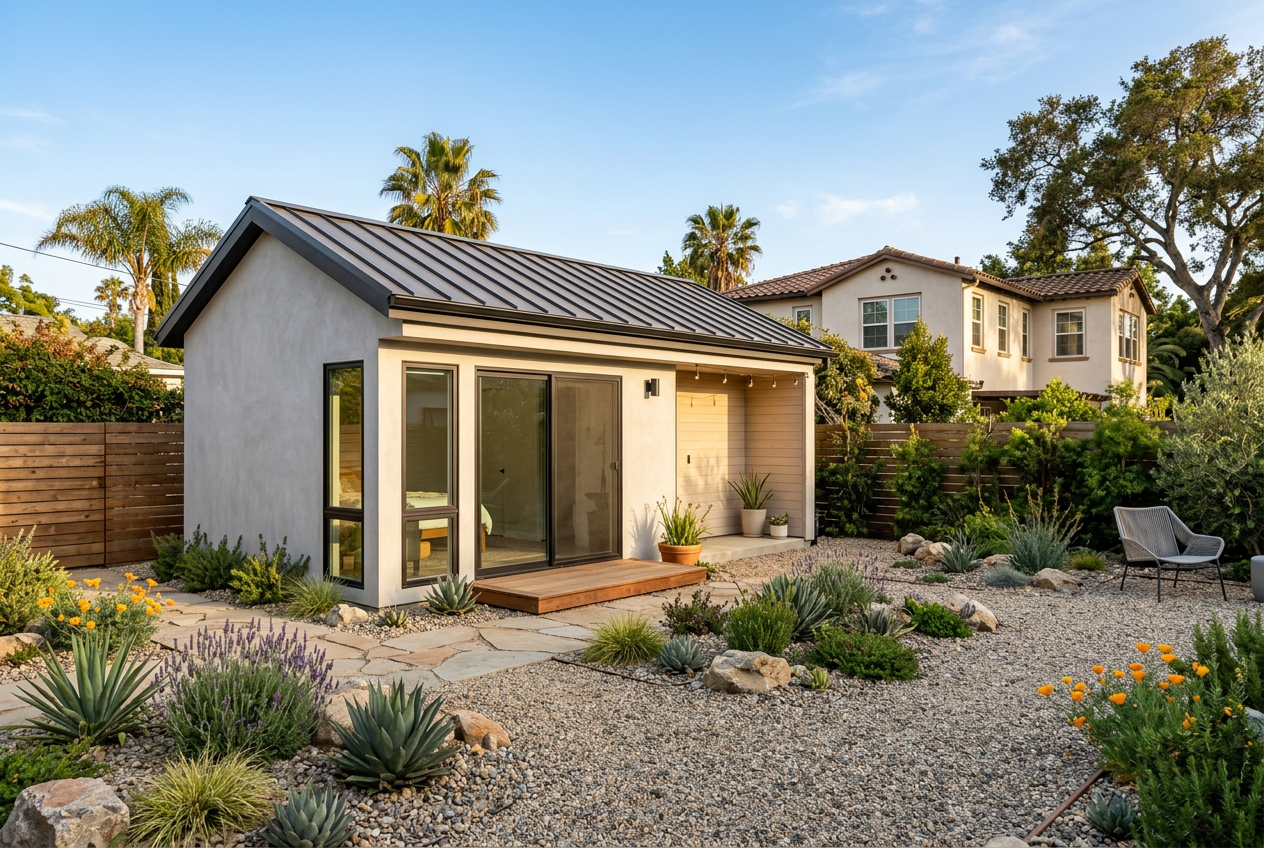
Many Southern California homeowners are building ADUs, converting garages, or adding backyard offices. These structures need wildfire planning just like the main house — sometimes more, since backyard structures can sit closer to fences, trees, slopes, or neighboring properties. When designing an ADU or detached structure, think about roof and wall material, vent protection, window placement, setbacks from vegetation, access for emergency response, distance from fences and storage areas, and landscape design around the structure. A small building deserves the same careful planning as the main house.
Garage Doors and Side Doors Should Be Checked
Garages are often overlooked, but embers can enter through gaps around garage doors, side doors, vents, and damaged weather seals. Before summer, inspect garage door seals for gaps and keep combustible storage organized and away from openings. If the garage is attached to the house, this matters even more, since a garage fire can spread directly into the main home.
Keep Access Clear for Firefighters
Wildfire preparation isn’t only about the house — firefighters need access too. Driveways, gates, address numbers, and access paths should be visible and clear. Overgrown vegetation near driveways can slow emergency response, and narrow or blocked paths make it harder for crews to reach your property. This is especially important for hillside properties, long driveways, canyon homes, and homes near narrow roads.
Prepare Before Red Flag Conditions
Fire danger in Southern California can increase quickly during hot, dry, windy conditions. Santa Ana winds are especially dangerous because they can move fire rapidly and carry embers long distances. Don’t wait until a warning is issued — by then, contractors may not be available and hardware stores may be busy. Before summer starts, homeowners should:
- Clean roofs and gutters
- Remove dry vegetation
- Create a clean area around the home (Zone 0)
- Check vents and screens
- Move combustible items away from walls
- Inspect decks and fences
- Review insurance documents and photograph the home and belongings
- Prepare emergency supplies and review evacuation routes
Preparation doesn’t eliminate risk, but it dramatically improves readiness.
Aesthetic Design and Fire Safety Can Work Together
Some homeowners worry fire-conscious design will make a home look plain. It doesn’t have to. A well-designed fire-resilient home can still be modern, warm, and beautiful. Gravel, stone, concrete, steel, stucco, fiber-cement products, and carefully selected planting can create a clean, elegant exterior. The goal isn’t to remove beauty — it’s to avoid unnecessary fuel next to the home and choose materials that perform better under wildfire exposure. Good architecture balances safety, comfort, code compliance, and visual quality.
Final Takeaway
Southern California homeowners can’t control wildfire weather, wind, or regional fire conditions. But they can control many of the conditions that allow embers and flames to damage a home. Reducing wildfire damage starts with preparation before summer: clean the property, protect Zone 0 around the home, inspect vents and windows, maintain defensible space through Zones 1 and 2, choose better materials during remodels, and design ADUs and outdoor structures with fire exposure in mind. A wildfire-resilient home isn’t created by one product or one checklist — it’s created by many smart decisions working together. The best time to make those decisions is before summer starts. If you’re planning a remodel, ADU, or new build in a fire-prone area of Southern California, contact PixelArch LLC for guidance on designing a home that’s both beautiful and wildfire-resilient.
Frequently Asked Questions

3 comments
Pingback: Residential Fire Sprinkler Systems in Southern California: CPVC vs. FIREPEX Explained - PixelArch LLC
Pingback: Rain-Season Roof & Gutter Checklist for SoCal Homes
Pingback: Home Insurance and Rebuild Costs in Southern California - PixelArch LLC