Stucco Cracks in Southern California: When to Worry
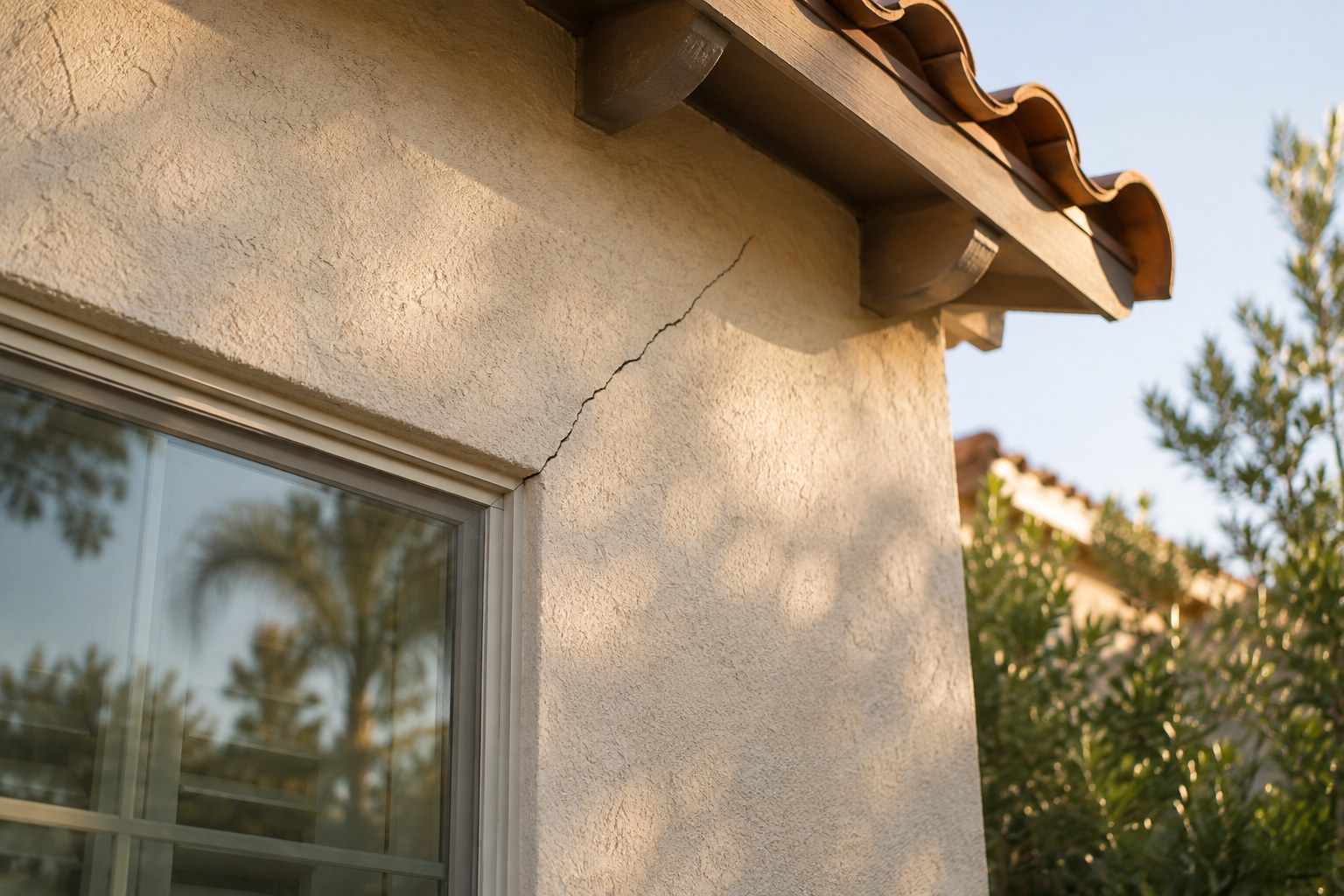
Most stucco cracks on a Southern California home are cosmetic: hairline shrinkage and thermal movement in a rigid finish over a moving frame. Worry when the pattern suggests movement or water rather than drying, meaning diagonal cracks from window and door corners, stepped cracks, cracks that cross from wall into foundation, cracks that are widening, or cracks paired with sticking doors, sloping floors, bulging plaster or staining. Photograph every crack with something for scale, date the photographs, repeat in a few months, and get a professional opinion if anything is growing or if the cracking sits alongside those other symptoms.
Why stucco cracks in the first place
Stucco is cement plaster, applied wet and cured hard, over a wood frame that never stops moving. It shrinks as it cures, expands in July, contracts in January, and rides every small settlement and modest earthquake. A finish that rigid over a structure that flexible will crack somewhere. That is a material property, not a defect. So the useful question is never whether your walls have cracks, but what kind of movement made them and whether that movement has stopped.
The cracks that are almost always cosmetic
Usually nothing to act on
- Fine map-like or spider cracking spread over a wall area, typical of shrinkage in the finish coat.
- Straight hairline cracks along a control joint, a lath seam or a change of plane, where the material was always going to part.
- Short hairline cracks radiating from a hose bib, light fixture or vent, where the stucco is thin around a penetration.
- Old cracks with weathered, dirt-filled edges and paint bridging them, which have been static long enough to accumulate grime.
These are maintenance items. Clean, patch with a flexible elastomeric product that can move with the wall, and repaint. Rigid mortar in a moving hairline crack simply cracks again along the same line.
The patterns worth a professional opinion
Structural movement and water do not produce random spider cracking. They produce direction. Look for a crack that has a clear line, a start and an end, and a story about which way something moved.
| What you see | What it usually points at | What to do |
|---|---|---|
| Fine spider or map cracking over an area | Shrinkage and thermal movement in the finish | Patch and repaint as maintenance |
| Diagonal crack from a window or door corner | Stress at the opening, possibly foundation movement | Photograph, monitor, get advice if it grows |
| Stepped crack following framing or block lines | Differential movement between parts of the structure | Have it assessed by a professional |
| Crack continuing from wall into the foundation | Movement in the foundation itself | Engineer, not a stucco contractor |
| Cracking with bulging, soft plaster or staining | Water behind the finish, possible framing damage | Open it up and find the water path |
| Wide cracks at the base of the wall near soil | Grade too high, moisture and soil movement | Fix the grading and drainage first |
Two symptoms carry more weight than any crack on its own: doors and windows that have begun to bind in one part of the house, and floors that have started to slope. When either appears alongside directional cracking on the same side of the house, the cracking is a symptom rather than the problem.
Water is the other half of the story. Almost every case of movement we are called about traces back to soil that got wetter and drier than it should have, which is why we treat cracking and drainage, grading and hillside conditions as one subject rather than two. Before the rains, the roof and gutter checklist is the cheapest crack prevention available.
How to monitor a crack properly
A method that takes fifteen minutes
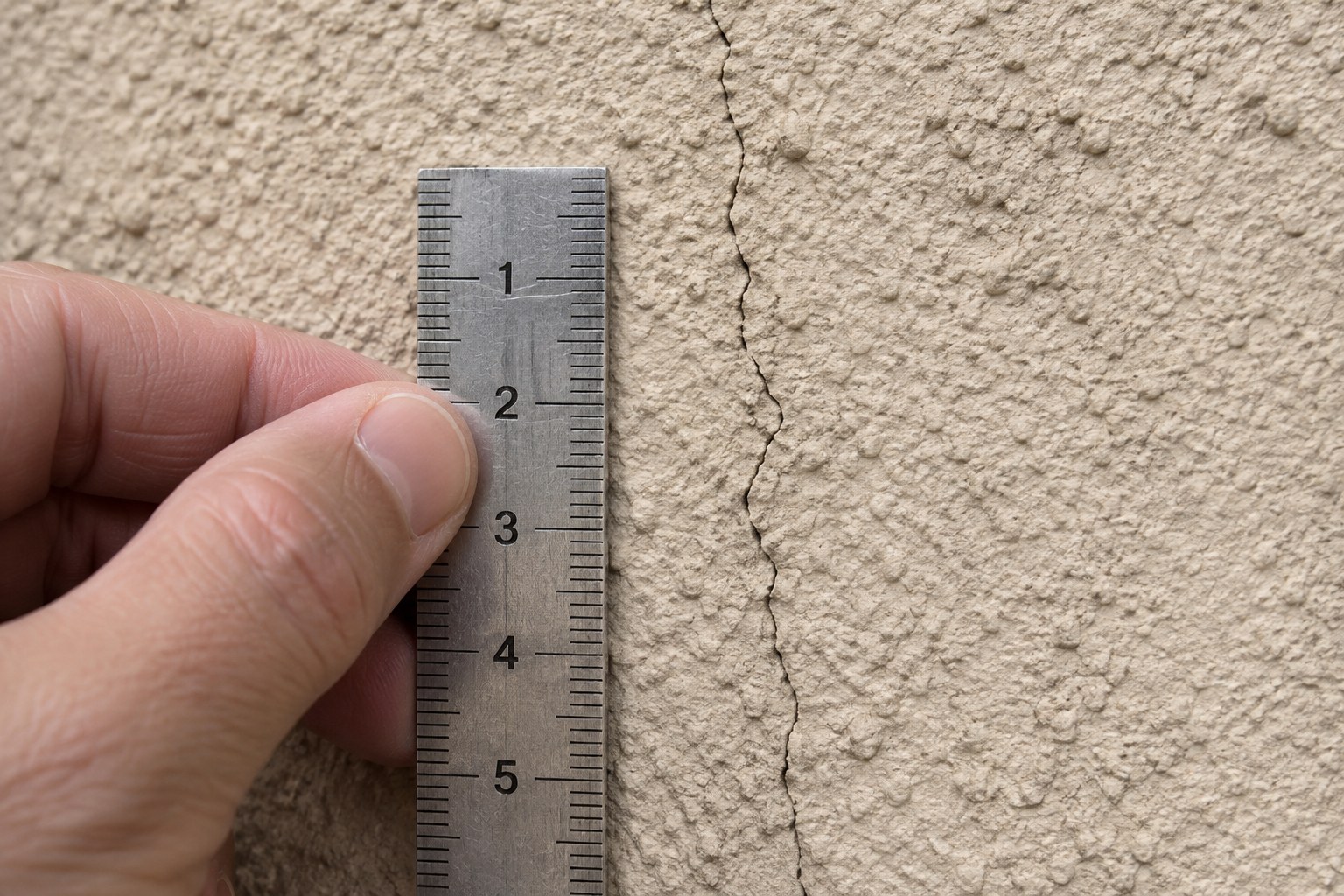
Number each crack. For each one take a wide shot of the whole wall and a close shot with a coin or ruler laid beside it, mark the ends with a light pencil tick and a date, and keep the files by date. Repeat the same shots after the first heavy rain and again at the end of summer, without painting over the ticks in between.
If nothing has changed across a wet winter and a hot summer, you have real evidence the movement has stopped. If a crack has extended past its tick, or the same pattern has appeared nearby, that is the moment to call.

What we do when an owner sends us photographs
PixelArch LLC looks at cracking in context rather than in isolation. We ask when the house was built and whether it has been remodeled, whether walls or openings have been altered, how the lot drains, whether there is a slope above or below, and what the interior is doing. A crack pattern on a 1960s slab-on-grade house on flat ground means something different from the same pattern on a hillside lot with a retained yard. Where a previous remodel removed or altered structural walls, that history usually explains more than the finish does.
When we work on an existing home we document as-built conditions properly, in a BIM model in Revit where the project justifies it, so framing, openings and repair details are coordinated rather than sketched. That documentation is also what a structural engineer needs in order to give a real opinion instead of a caveat.
Then we tell you plainly which of three things you have: a maintenance item, something to monitor with dated photographs, or something that needs a licensed engineer now. If a purchase is involved, that assessment belongs before you close, which is what our 48-hour feasibility review exists for. If repairs turn out to be structural, our note on what structure actually costs will make the numbers less of a surprise.
An owner’s checklist
Walk your walls twice a year
- Once before the rains and once at the end of summer, walk all four elevations in daylight.
- Photograph every crack wide and close, with a coin for scale and the date recorded.
- Check the base of the walls: soil, mulch or new hardscape must not sit against the stucco.
- Test doors and windows on each elevation for new binding, and note any floor that has begun to slope.
- Look for staining, blistering paint, or plaster that sounds hollow when tapped near a crack.
- Compare against last season’s photographs before deciding anything has changed.
Seasonal timing for this and every other exterior check sits in our Southern California home maintenance calendar.
Not sure what you are looking at
Send us photographs. A wide shot and a close shot of each crack, the address, and a sentence about anything else you have noticed indoors. We will tell you whether it reads as cosmetic, worth monitoring, or worth an engineer, and we will say when the honest answer is that it cannot be judged from photographs. Contact PixelArch LLC.
Frequently Asked Questions About Stucco Cracks
Fine cracks are common and usually cosmetic. Stucco is a rigid cement plaster over a flexible frame, so it cracks as the building settles, dries, expands with heat and moves in small earthquakes. What matters is not whether cracks exist but their width, pattern, location and whether they change over time.
Width alone is not a verdict, but it sorts things usefully. Hairline cracks you can barely trace with a fingernail are usually shrinkage. Cracks wide enough to take a coin edge, cracks wider at one end than the other, and cracks that open and close through the year deserve a closer look. A crack that is growing matters more than a wide crack that has been static for a decade.
Diagonal cracks running from the corners of windows and doors, stepped cracks that follow the block or framing lines, cracks that continue through more than one surface such as wall into foundation, cracks paired with sticking doors or sloping floors, and any crack accompanied by bulging, staining or soft plaster. Those patterns point at movement or water rather than shrinkage.
Not by itself. Openings concentrate stress, so window and door corners are where ordinary movement shows up first. It becomes a concern when the crack is diagonal and widening, when the same pattern appears at several openings on one side of the house, or when doors and windows in that area have started to bind.
Indirectly, yes, and it is one of the most common causes we see. Soils that swell when wet and shrink when dry move the foundation with them, and the wall telegraphs that movement. Water arriving against a wall from a blocked downspout or a yard that drains toward the house is a drainage problem showing itself as a crack.
Photograph each crack twice: a wide shot showing where it sits on the wall, and a close shot with a coin or ruler beside it for scale. Keep the file dates intact and repeat from the same positions in a few months. A dated series showing no change is often the most reassuring evidence you can have.
Patching a stable hairline crack is reasonable maintenance, ideally with an elastomeric patching product rather than rigid mortar so it can move. Patching an active crack hides the only signal you have. If the pattern suggests movement or water, find the cause first, then repair the finish.
It can. Stucco is not the waterproofing layer, the building paper or weather-resistive barrier behind it is, so a hairline crack alone rarely soaks a wall. Cracks at penetrations, at the base of the wall, or paired with staining, blistering paint or damp interior finishes suggest the water is finding a path and should be looked at before the rains.
It depends on the pattern. Cosmetic cracking is a stucco contractor’s work. Anything suggesting structural movement, slope instability or foundation problems needs a licensed structural or geotechnical engineer. We are often the first call because reading the whole picture decides which specialist you actually need.
Small patching and repainting generally does not need a permit, while replacing large areas of stucco, altering openings, or repairing structural framing or foundations usually does. Requirements and thresholds differ by city and county, so confirm what applies to your address with your local building department before work begins.
This article is general educational guidance for Southern California homeowners and is not a property-specific inspection, an engineering opinion or a code determination. Cracking can have many causes and cannot be diagnosed reliably from a description or a photograph alone. Repair and permit requirements differ by city and county, so confirm what applies to your address with your local building department. Structural, foundation and slope questions must be assessed by appropriately licensed engineers. If cracking is widening, or comes with sticking doors, sloping floors, bulging plaster or water intrusion, consult a qualified professional promptly.