The architect presents a stunning modern design — floor-to-ceiling glass, panoramic canyon views, a wall of sliding doors opening to the pool deck. The homeowner is thrilled. Then the energy consultant runs the Title 24 model. It fails.
This is one of the most common — and most frustrating — moments in Southern California residential design. But here is the good news: Title 24 does not stop homeowners from having beautiful, glass-rich modern homes. The code simply requires the design team to balance aesthetics with energy performance. When that balance is planned early, the result is a home that looks stunning, feels comfortable, and passes compliance without last-minute redesigns.
California’s 2025 Energy Code applies to all permit applications submitted on or after January 1, 2026. It introduces stricter, climate-zone-specific requirements for windows and glazed doors. This guide explains what changed, why glazing is such a critical factor, and how homeowners, architects, and developers can keep the design vision alive while meeting every compliance requirement.
Why Glazing Is the Biggest Design Factor in Title 24 Compliance
Windows and glazed doors are the weakest link in a building’s thermal envelope. A well-insulated wall might have an R-value of 21 or higher. A high-performance window, even with dual glazing and Low-E coatings, might offer an effective R-value of only 3 to 4. That means glass loses heat five to seven times faster than the surrounding wall.
Under Title 24, this matters enormously. The energy model calculates heating and cooling loads for the entire building, and fenestration — the technical term for windows, glazed doors, and skylights — is one of the largest variables. More glass means more solar heat gain in summer, more heat loss in winter, and higher HVAC loads year-round.
This does not mean large glass is a problem. It means uncontrolled glass is a problem — too much west-facing glazing, poor solar heat gain performance, weak frame insulation, no exterior shading, or too much skylight area without compensation elsewhere in the design.

What Title 24 Actually Measures: U-Factor, SHGC, Window Area, and Orientation
To understand how glazing affects compliance, you need to understand the four key metrics Title 24 uses to evaluate fenestration performance.
U-Factor: How Well the Window Resists Heat Transfer
U-factor measures the rate of heat transfer through a window assembly — including the glass, frame, and spacer. Lower is better. A window with a U-factor of 0.27 loses less heat than one rated at 0.40.
Under the 2025 prescriptive requirements for new single-family homes, the maximum U-factor varies by climate zone:
- 0.27 in Climate Zones 1–5, 11–14, and 16
- 0.30 in Climate Zones 6–10 and 15
The mandatory maximum U-factor for all climate zones is 0.40. This is the absolute ceiling — no window in any new home can exceed this value, regardless of the compliance path used.
SHGC: How Much Solar Heat Passes Through the Glass
Solar Heat Gain Coefficient measures how much of the sun’s heat energy passes through the window. Lower SHGC means less solar heat enters the building, which reduces cooling loads — especially important on south and west exposures in hot climates.
The 2025 prescriptive SHGC requirements are:
- 0.23 in Climate Zones 2, 4, and 6–14
- 0.20 in Climate Zone 15 (desert)
- No prescriptive SHGC requirement in Climate Zones 1, 3, 5, and 16 (heating-dominated zones)
Visible Transmittance: The Aesthetic Factor Most People Overlook
Visible Transmittance (VT) measures how much daylight passes through the glass. This is not a compliance threshold, but it matters aesthetically. Homeowners who want bright, airy interiors need to understand that some Low-E coatings that achieve excellent SHGC numbers can also reduce visible light, making rooms feel dimmer than expected. The best glazing specifications balance SHGC performance with VT to keep rooms bright without excessive heat gain.
Fenestration Area and Orientation Limits
Under the prescriptive path, the 2025 code limits fenestration to:
- 20% maximum fenestration area relative to conditioned floor area
- 5% maximum west-facing fenestration area relative to conditioned floor area (in most climate zones)
Exceeding either threshold does not automatically disqualify the design — but it does require the performance compliance path, where energy modeling software evaluates the entire building as a system. This is where trade-offs become possible.
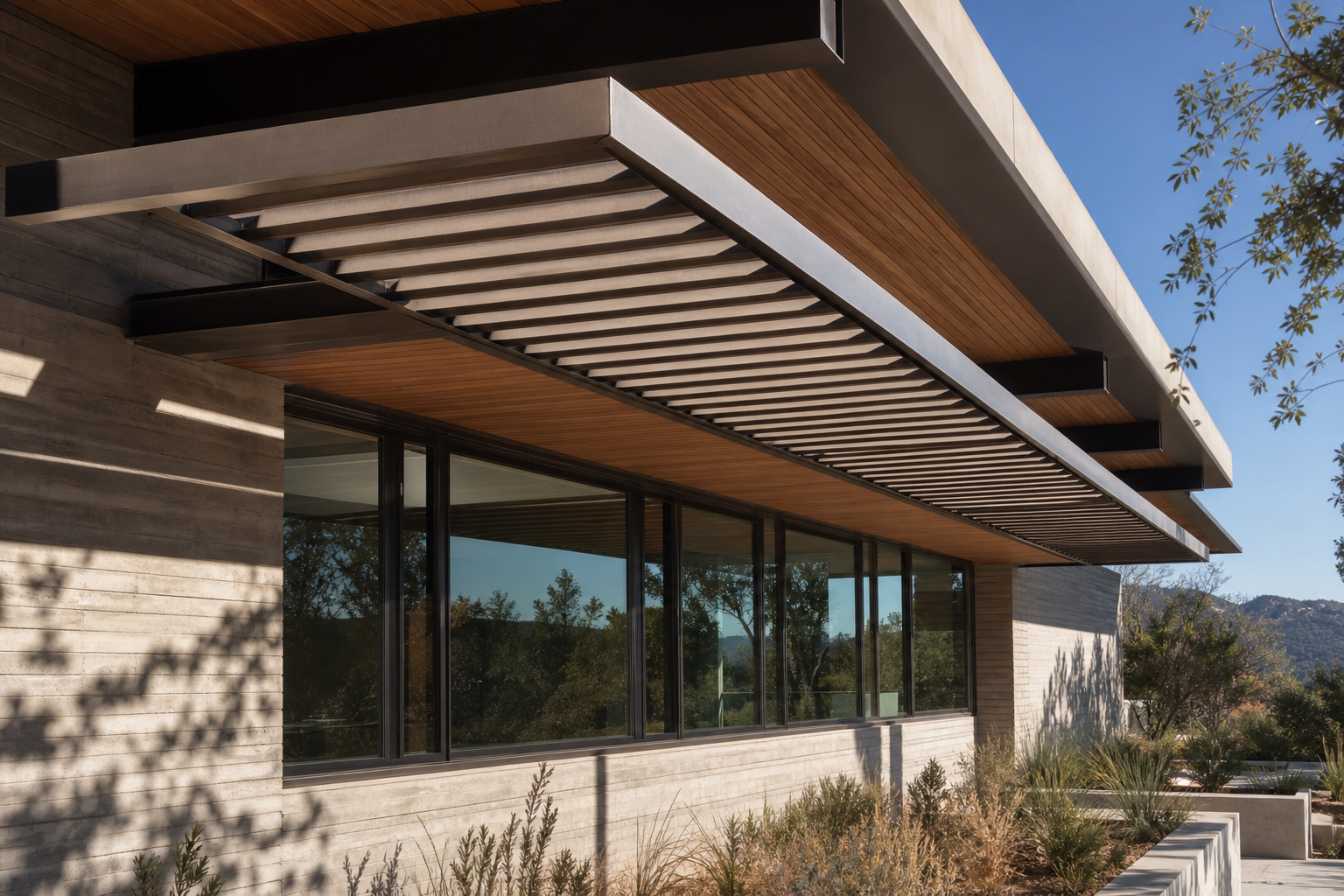
Why Southern California Is Not One Single Energy Zone
One of the most common mistakes homeowners and developers make is assuming all of Southern California has the same Title 24 requirements. It does not. California uses 16 climate zones, and Southern California spans several of them:
| Climate Zone | Region | Max U-Factor | Max SHGC |
|---|---|---|---|
| Zone 6 | Los Angeles coast, Long Beach | 0.30 | 0.23 |
| Zone 8 | South coast, Laguna Beach, San Diego coast | 0.30 | 0.23 |
| Zone 9 | Inland valleys, Pasadena, Riverside west | 0.30 | 0.23 |
| Zone 10 | Inland Empire, Riverside, San Bernardino | 0.30 | 0.23 |
| Zone 14 | High desert, Palmdale, Lancaster | 0.27 | 0.23 |
| Zone 15 | Desert, Palm Springs, Coachella Valley | 0.30 | 0.20 |
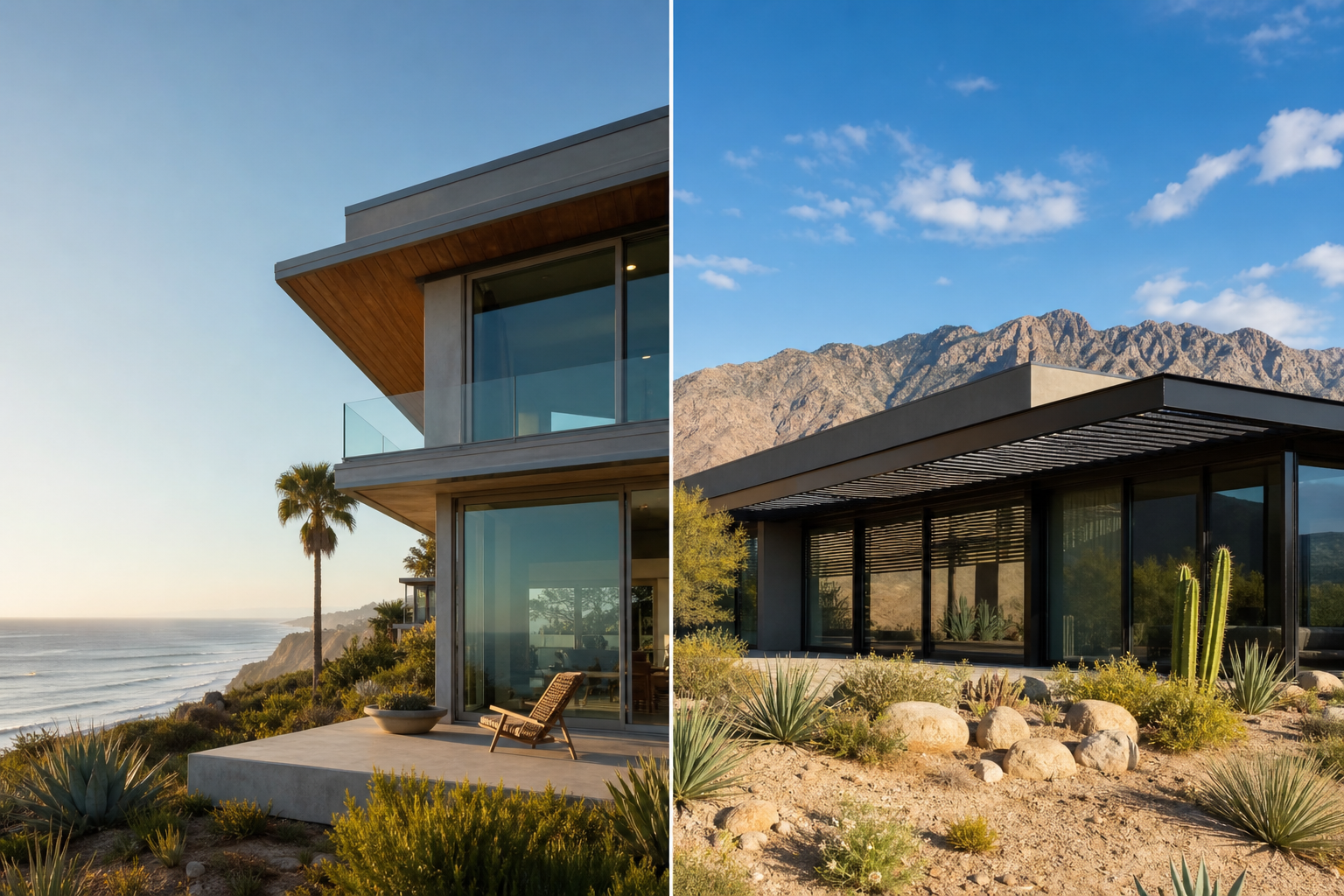
A coastal project in Laguna Beach (Zone 8) and a desert project near Palm Springs (Zone 15) face different U-factor and SHGC thresholds. A design that passes compliance in one zone may not pass in another — even if the floor plan is identical. The climate zone must drive the glazing specification from day one, not after the design is finalized.
Large Windows, Sliding Doors, and the West-Facing Glass Problem
Southern California living is defined by indoor-outdoor connections — large sliding doors, expansive view windows, and open-plan layouts that blur the line between inside and outside. Title 24 does not prohibit any of this. But it does require the design to account for the energy impact.
Sliding Doors Are Not Just Doors
Under Title 24, glazed doors with a glass area of 25% or more are classified as fenestration and must meet the same U-factor and SHGC requirements as windows. That 12-foot multi-slide door opening to the backyard is not treated as a door in the energy model. It is part of the fenestration calculation — and often one of the largest single contributors to heat gain.
Why West-Facing Glass Is the Hardest to Manage
West-facing windows receive direct afternoon sun during the hottest part of the day. In inland Southern California, this can drive cooling loads dramatically. The prescriptive code limits west-facing fenestration to 5% of conditioned floor area in most climate zones. For a 2,500-square-foot home, that is only 125 square feet of west-facing glass — roughly two large windows or one sliding door.
This is where many designs run into trouble. The homeowner wants a sunset view from the living room. The architect designs a beautiful west-facing glass wall. The energy model flags it immediately.
The solution is not to eliminate the view. The solution is to manage the heat gain — through better glass, exterior shading, or trade-offs elsewhere in the building.
How to Keep the Aesthetic Without Failing the Energy Model
This is the most important section for homeowners and architects. Title 24 does not require ugly homes. It requires smart design. Here are the most effective strategies for preserving architectural beauty while meeting or exceeding energy compliance.
1. Place Larger Glazing on Better Orientations
North-facing glass gets almost no direct solar heat gain. South-facing glass gets consistent sun that is easier to shade with horizontal overhangs. East-facing glass gets morning sun that is less intense. West-facing glass gets the worst combination: intense afternoon sun during peak cooling hours.
By concentrating the largest glass areas on the north and south elevations and reducing glass on the west, the design can stay visually open while reducing the energy penalty.
2. Use Deep Overhangs for South-Facing Windows
A properly designed overhang can block high-angle summer sun while allowing low-angle winter sun to enter and warm the home. This is one of the oldest passive design strategies, and it still works. In Southern California, an overhang depth of 2 to 3 feet can significantly reduce cooling loads on south-facing glass.
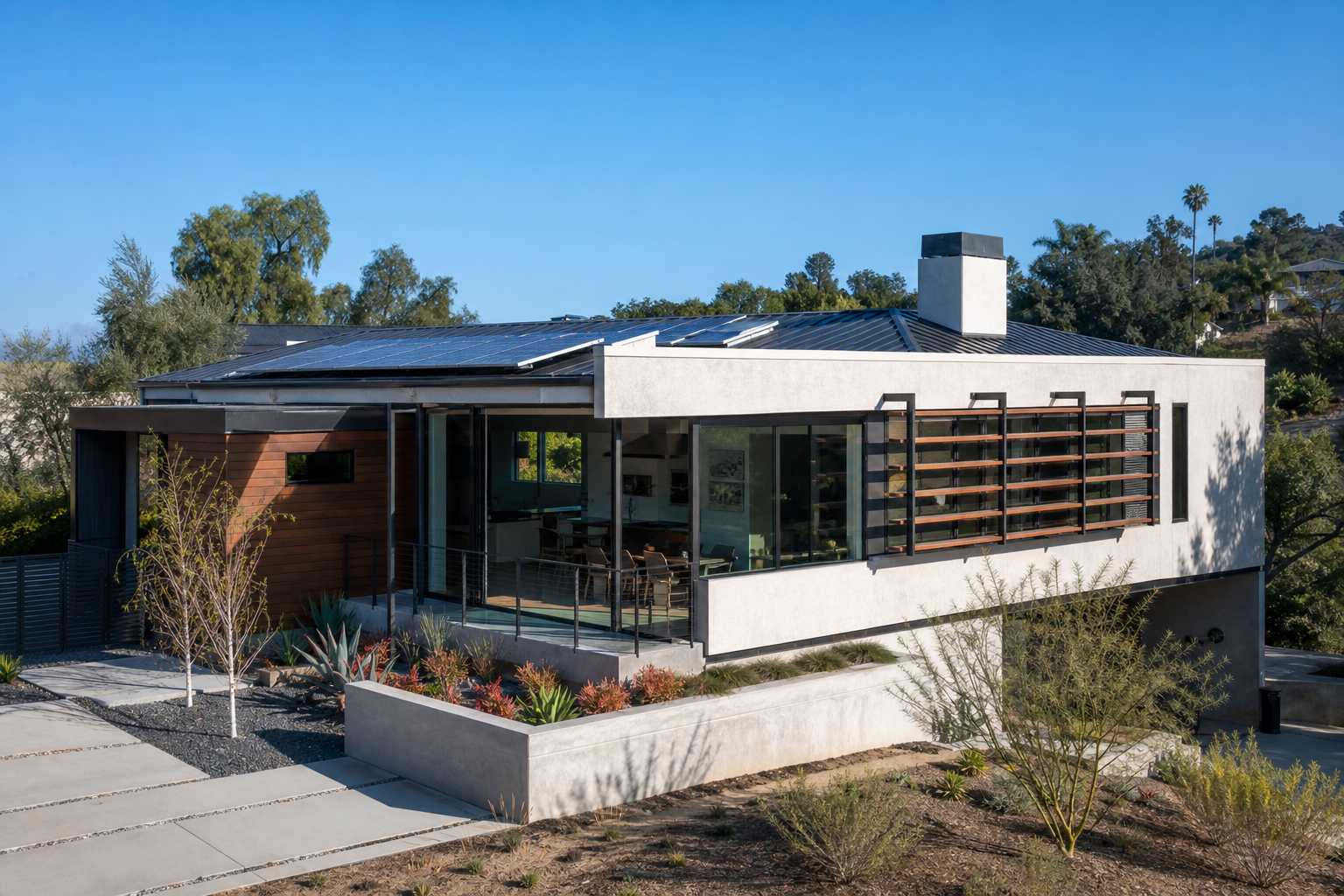
3. Add Vertical Fins, Screens, or Landscape Shading for East and West Exposure
Because east and west sun hits the building at a low angle, horizontal overhangs are less effective. Vertical fins, architectural screens, deep recessed window frames, or strategic landscape plantings can reduce heat gain without blocking the view entirely.
4. Choose Low-SHGC Glass Where Heat Gain Is a Problem
Modern glazing technology offers excellent low-SHGC performance without making the glass look dark or heavily tinted. Spectrally selective Low-E coatings block infrared heat while transmitting visible light. A window with an SHGC of 0.22 and a VT of 0.40 or higher will still feel bright and clear — while blocking most of the heat.
5. Specify High-Performance Frames
The frame material matters more than most homeowners realize. Vinyl and fiberglass frames outperform aluminum thermally. Thermally broken aluminum frames offer a middle ground for projects that want a slim, modern profile without sacrificing too much U-factor performance.
6. Use Larger Fixed Windows Where Possible
Fixed (non-operable) windows can often achieve better U-factor and SHGC ratings than operable windows of the same size and frame type. If the design includes large view windows that will never be opened, specifying them as fixed units can improve the overall fenestration performance.
7. Reduce or Reposition Skylights
Skylights receive direct overhead sun and can contribute significant heat gain. Under the prescriptive path, skylight area is limited. If the design includes skylights, placing them on north-facing roof slopes and specifying low-SHGC glazing can reduce their impact.
8. Balance Glass-Heavy Elevations With Stronger Building Components
This is where the performance compliance path becomes essential. If the design requires more glass than the prescriptive limits allow, the energy model can compensate with improvements elsewhere — better wall insulation, a higher-efficiency HVAC system, a cool roof, tighter duct sealing, or additional solar capacity.

Prescriptive vs. Performance: Understanding the Two Compliance Paths
Title 24 offers two paths to demonstrate compliance, and understanding the difference is critical for any project with significant glazing.
The prescriptive path is a checklist. Each building component must individually meet specific thresholds — U-factor, SHGC, insulation R-value, fenestration area limits, and so on. If the design stays within all prescriptive limits, compliance is straightforward.
The performance path uses CEC-approved energy modeling software to evaluate the entire building as a system. The proposed design is compared against a “standard design” baseline. If the proposed building’s total energy use meets or beats the baseline, it passes — even if individual components exceed prescriptive thresholds.
For projects with large windows, open floor plans, or design-forward elevations, the performance path is almost always required. This is not a problem — it is an opportunity. It allows the architect and energy consultant to make strategic trade-offs: more glass on one elevation compensated by better insulation, a more efficient heat pump, tighter air sealing, or additional solar panels.
Other Parameters That Affect the Title 24 Calculation
Glazing is one of the biggest factors, but Title 24 evaluates the whole house. Understanding the full list of trade-off items helps homeowners see why a beautiful, glass-rich design can still pass compliance when the rest of the building is designed to compensate.
- Roof insulation and cool roof performance — A cool roof with high solar reflectance can offset significant cooling loads, especially in hot inland climate zones.
- Wall insulation — Higher R-value walls, including ICF construction, provide continuous insulation that reduces the energy penalty of larger window areas. (Learn more about ICF walls in our dedicated guide.)
- HVAC efficiency and heat pump selection — A high-efficiency heat pump system can compensate for higher cooling loads from large west-facing glass.
- Duct location and leakage — Ducts in conditioned space with low leakage rates improve overall system performance.
- Air sealing and ventilation — A tighter building envelope reduces uncontrolled air infiltration, improving both comfort and compliance.
- Water heating system — Heat pump water heaters are significantly more efficient and provide compliance credit.
- Solar PV and battery storage — Required on most new homes in California, but additional capacity can provide compliance margin.
- Building orientation and floor plan — Strategic orientation can reduce solar exposure on problem elevations without changing the architectural style.
The key takeaway: Title 24 is a whole-house energy calculation, not a window-only checklist. A design that exceeds glazing limits can still pass if the rest of the building performs well enough to compensate.
Common Mistakes Homeowners and Developers Make
After working on dozens of residential projects across California, these are the mistakes we see most often:
- Designing the glass last. Glazing should be part of the energy strategy from the first schematic — not an afterthought that gets “fixed” by the energy consultant.
- Assuming all of Southern California is one climate zone. A coastal project and an inland valley project just 30 miles apart can have different U-factor and SHGC requirements.
- Ignoring west-facing exposure. West glass is the most penalized orientation. Every square foot of unshaded west-facing glass requires compensation elsewhere.
- Choosing windows based only on appearance. Frame material, glass coating, gas fill, and spacer system all affect compliance. The architect and energy consultant need to coordinate specifications early.
- Forgetting that sliding doors count as fenestration. A multi-slide door system can easily add 80 to 120 square feet of glazing to the energy model.
- Waiting until plan check to run the energy model. If the model fails at plan check, fixing it means redesigning elevations, changing window specifications, or upgrading HVAC — all of which cost time and money.
- Over-relying on solar panels to fix everything. Solar PV helps, but it cannot compensate for an envelope that is fundamentally inefficient. The building still needs to perform within reasonable limits.
How PixelArch Coordinates Design and Energy Compliance
At PixelArch, we coordinate architectural design with energy modeling from the earliest design phase. Instead of designing a beautiful home and hoping it passes Title 24, we integrate energy performance into the design process so the final permit set is both architecturally compelling and fully compliant.
Our approach includes:
- Climate-zone-specific glazing strategies from schematic design
- Orientation and shading analysis before floor plans are finalized
- Window specification coordination — matching U-factor, SHGC, and VT to each elevation
- Trade-off analysis for projects that need the performance compliance path
- Permit-ready documentation that addresses Title 24 requirements upfront
The result: homeowners get the modern, open, light-filled home they want — and the permit set moves through plan check without energy compliance surprises. Start with a free 48-hour feasibility review to see how your project can balance design ambition with energy code requirements.
Frequently Asked Questions
No. Large windows do not automatically fail Title 24. However, they increase the building’s energy load, so the design must compensate with better glass specifications, strategic shading, or improvements to other building components like insulation, HVAC, and air sealing.
Under the 2025 Energy Code, the prescriptive maximum U-factor is 0.27 in Climate Zones 1–5, 11–14, and 16, and 0.30 in other zones. The mandatory maximum for all zones is 0.40. Lower U-factor values indicate better thermal performance.
SHGC stands for Solar Heat Gain Coefficient. It measures how much solar heat passes through a window. Lower SHGC means less heat enters the building, reducing cooling costs. In hot Southern California climate zones, SHGC requirements can be as strict as 0.20.
Yes, but the project will likely need to use the performance compliance path. This allows the energy model to evaluate the whole building as a system and make trade-offs — better insulation, a more efficient HVAC system, or additional solar capacity can compensate for extra glass area.
Yes. Under Title 24, any glazed door with 25% or more glass area is classified as fenestration and must meet the same U-factor and SHGC requirements as windows. Multi-slide and bi-fold door systems are included in the fenestration calculation.
The prescriptive path allows a maximum of 20% fenestration area relative to conditioned floor area, and 5% maximum west-facing fenestration area in most climate zones. Projects exceeding these limits must use the performance compliance path with energy modeling.
Orange County spans multiple Title 24 climate zones. Coastal areas like Laguna Beach and Newport Beach fall in Zone 8, while inland areas like Anaheim and Irvine may fall in Zone 8 or Zone 10. The exact climate zone is determined by the project’s specific address, not the county.
If your project exceeds the prescriptive fenestration area limits — more than 20% total window area or more than 5% west-facing glass — you will need energy modeling through the performance compliance path. Most custom homes with design-forward glazing require this approach.
The prescriptive path is a component-by-component checklist where each element must meet specific thresholds. The performance path uses energy modeling software to evaluate the whole building, allowing trade-offs between components. Projects with generous glazing typically use the performance path.
Overhangs block direct sunlight from entering through windows, reducing solar heat gain without reducing natural daylight. South-facing overhangs are most effective because the sun is at a high angle in summer. The performance compliance path gives credit for properly designed overhangs and shading devices.
Final Takeaway
Title 24 does not stop homeowners from building beautiful modern homes with large windows and indoor-outdoor living. But in Southern California, glass must be designed as part of the energy strategy — not just the architectural style.
The best projects coordinate aesthetics and energy modeling from the very first design phase. The architect, energy consultant, and homeowner work together to balance glass placement, shading, glazing specifications, and building performance so the final home looks good, feels comfortable, passes compliance, and avoids last-minute redesigns.
Planning a project with significant glazing? Request a free 48-hour feasibility review from PixelArch and find out how your design can meet Title 24 without compromising the vision.

One comment
Pingback: Southern California Home Maintenance Calendar: Month by Month - PixelArch LLC